The Multigenerational Home Design Theme: 10 Top Inspirations Compared
Design Theme: Harmonizing Privacy, Connection & Function Across Generations
At the heart of Homestyler’s 'Multi-generational Home for Web' contest lies a profound spatial challenge: how to thoughtfully layer privacy, intergenerational connection, and functional flexibility within a single dwelling. With over 91 submissions from 81 designers worldwide — from Uzbekistan to New Zealand, Russia to the USA — the winning entries reveal six distinct design philosophies, each solving this triad in radically different ways. From countryside farmhouse adaptations with symbolic bridges between generations, to compact urban LDKs with dedicated reading nooks and breakfast corners, the top designs prove that multigenerational living isn’t about compromise — it’s about intelligent spatial choreography, empathetic material choices, and light-infused layouts that honor both solitude and shared joy.
Minimalist Clarity vs. Warm Textural Layering 🌟
This contrast explores how restraint versus richness in materials and lighting shapes emotional resonance. Minimalist schemes use monochromatic palettes, clean lines, and uncluttered sightlines to create calm, legible zones — ideal for aging eyes and cognitive ease. In contrast, textural layering employs wood grains, woven textiles, tactile wall finishes, and warm-toned lighting to evoke comfort, memory, and domestic intimacy — especially vital for young children and elders seeking sensory reassurance. Layout-wise, minimalism often relies on open-plan fluidity with subtle floor-level or furniture-based zoning; textural approaches may incorporate gentle thresholds (e.g., rug boundaries, lowered ceilings, or timber screens) to signal transitions without visual barriers.

Natalia Farias’ Casa Club embraces minimalist clarity: its monochromatic palette, floating shelves, and strategic mirror placement maximize perceived space and visual calm — a smart Homestyler application for compact multigenerational homes where clarity reduces daily friction.
Start Your Free Design
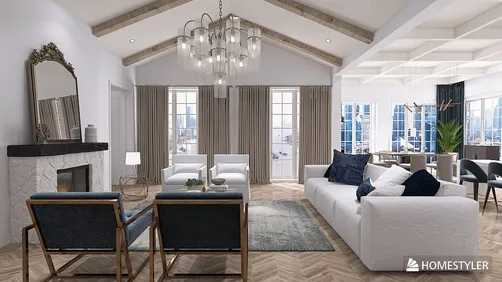
Vendetta V’s Multi-generation home for Web exemplifies warm textural layering: soft linen sofas, glowing ambient lamps, curated photo walls, and natural wood tones build an emotionally rich, nostalgic atmosphere — a Homestyler-powered demonstration of how layered warmth fosters belonging across ages.
Begin Cozy DesignRural Integration vs. Urban Compactness 🏡
These two strategies tackle site context head-on. Rural integration leverages landscape as an extension of the home — courtyards, porches, garden bridges, and outdoor dining become generational connectors, blurring indoor/outdoor boundaries to expand usable square footage organically. Urban compactness, meanwhile, prioritizes vertical zoning, multifunctional furniture (e.g., Murphy beds, fold-down desks), and highly efficient circulation — turning tight footprints into agile, age-adaptive environments. Lighting here is critical: rural schemes embrace abundant natural daylight and sunset HDR scenes (like Homestyler’s 'g_lilienstein' preset), while urban ones rely on layered artificial lighting (task + ambient + accent) to compensate for limited windows.

Natalia Gribacheva’s Уютный уголок для семьи (Cozy Corner for the Family) uses rural integration masterfully: the double-height fireplace anchors intergenerational gathering, while the visible garden view through large glazing extends the living space outward — a Homestyler design that transforms landscape into relational infrastructure.
Launch Warm Design
Sandro Valeri’s Spazi Modulari di Luce (Modular Light Spaces) responds to urban compactness with architectural transparency: glass partitions, reflective surfaces, and elevated entry platforms visually expand volume and enable visual supervision — a Homestyler-driven solution for small apartments needing both teen autonomy and elder oversight.
Create Outdoor HavenOpen-Plan Fluidity vs. Defined Generational Zones 🔄
This dichotomy addresses the core tension between togetherness and autonomy. Open-plan fluidity removes physical barriers entirely — using furniture groupings, ceiling treatments, or lighting zones to define activity areas (e.g., cooking, studying, relaxing) without walls. It encourages spontaneous interaction and supports caregivers monitoring multiple family members. Defined generational zones, conversely, allocate dedicated, semi-private suites — like grandparents’ ground-floor bedrooms with en-suite bathrooms, or teens’ lofted lounges — connected via shared circulation but acoustically and visually buffered. Both benefit from Homestyler’s real-time 3D walkthroughs, allowing clients to experience spatial flow or privacy before construction.

Mica Donker’s Family Home champions defined generational zones: a closed office downstairs for parents’ work privacy, and an upstairs lounge exclusively for teenagers — a Homestyler layout that intelligently separates life stages while maintaining cohesive architecture.
Open Urban Plan
T Yener’s "A Living Space That Strengthens Intergenerational" chooses open-plan fluidity: the seamless LDK (Living-Dining-Kitchen) with high ceilings and large windows creates a unified social hub — a Homestyler-designed environment where meals, homework, and storytelling happen in one breathable, light-filled continuum.
Build Family ZonesTraditional Craft Sensibility vs. Contemporary Tech-Forward Design ⚙️
This pairing reveals how heritage and innovation serve the same goal: dignity across ages. Traditional craft sensibility draws on regional materials (exposed beams, hand-glazed tiles, carved woodwork), tactile surfaces, and time-honored proportions — evoking stability and intergenerational continuity. Contemporary tech-forward design integrates smart storage (motorized cabinets), adaptive lighting systems, accessible-height countertops, and AI-assisted layout optimization — prioritizing safety, ergonomics, and future-proof flexibility. Both styles leverage Homestyler’s extensive library of realistic materials and smart furniture tools to prototype these features instantly — bridging sentiment and sensor technology.

Hilola Mamadhanova’s дом для большой семьи (Home for a Large Family) embodies traditional craft sensibility: its symmetrical patio layout, ceramic-tiled flooring, and handwoven outdoor rugs root the design in Central Asian domestic traditions — a Homestyler project that honors cultural continuity as a pillar of multigenerational harmony.
Design Scandinavian Space
Toni Sandison’s A Cozy Haven for New Beginnings represents contemporary tech-forward design: the cradle swing, integrated baby-safe lighting, and optimized clear-floor pathways reflect Homestyler’s strength in prototyping infant- and elder-friendly ergonomics — turning digital design into tangible care infrastructure.
Craft Cultural PatioTry Creating Your Own Multigenerational Masterpiece ✨
Inspired by these 10 award-winning approaches? Now it’s your turn. Open Homestyler, pick a floor plan — whether a compact city apartment or a sprawling suburban lot — and experiment with one of these powerful contrasts: add a sunlit reading nook for grandparents, carve out a teen loft with acoustic panels, or redesign a kitchen island to serve as both meal prep station and homework hub. Then, submit your design to Homestyler’s weekly interior design contests — where every upload enters you to win Coins, community recognition, and the chance to shape how families live, love, and grow together across generations.
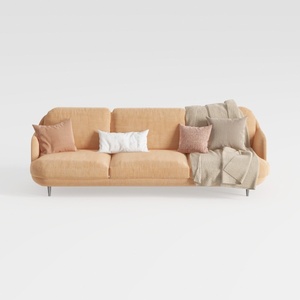

Modern Minimalist Peach Fabric Sofa with Throw Pillows and Blanket 3D Model

Minimalist Solid Oak Round Side Table Set 3D Model
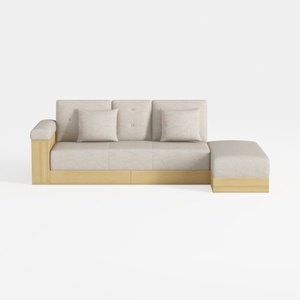
Minimalist Linen Solid Wood Sectional Sofa 3D Model
Homestyler is an easy-to-use online home design platform offering powerful 3D rendering tools, a vast collection of interior decoration projects, and helpful DIY video tutorials. It’s perfect for creating and visualizing your dream space with confidence and creativity.
Desain sekarang Gratis