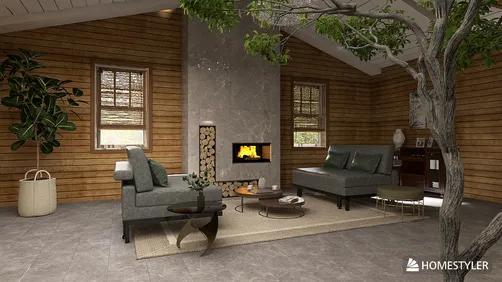
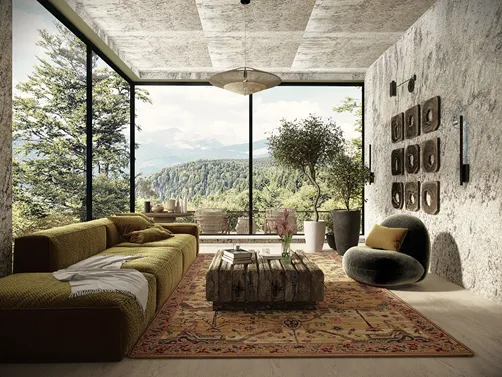
Forest-Style Living Space Design
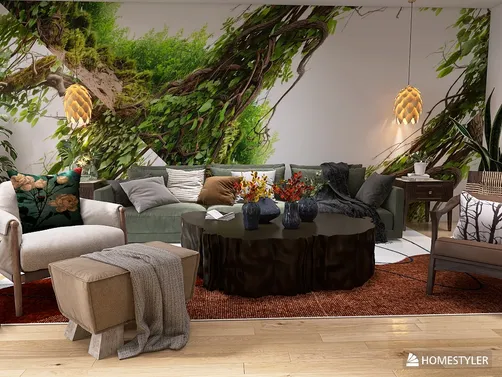
The 'Forest-Style Living Space' is a biophilic interior design scene that evokes the serenity, texture, and vitality of natural woodland environments. Rather than literal replication, it interprets forest aesthetics through intentional materiality (raw wood, stone, bamboo), layered greenery (indoor plants, vertical gardens, moss accents), tactile surfaces (rough-hewn timber, woven rattan, unglazed ceramics), and light-responsive spatial planning (large windows, skylights, reflective water features). This scene transcends room typology — appearing in living rooms, dining areas, sunrooms, or even transitional zones like entryways and stairwells — and prioritizes emotional resonance: calmness, groundedness, and organic rhythm over rigid formality. It represents a holistic approach to indoor space planning where nature isn’t just decor — it’s the structural and sensory framework.
Design Challenges and Common Pitfalls
Forest-style living spaces often face three interrelated challenges: First, visual clutter — excessive plants, rustic textures, and earth-toned layers can overwhelm small or low-ceilinged areas without disciplined editing and negative space strategy. Second, lighting mismanagement — dense foliage and deep greens absorb light, risking dim, cave-like interiors if artificial and natural illumination aren’t layered intentionally. Third, material authenticity vs. practicality — untreated wood or porous stone may look authentic but can compromise durability, maintenance, and indoor air quality in high-traffic residential settings. These pitfalls highlight why thoughtful indoor space planning and precise Homestyler design techniques are essential to balance aesthetic ambition with livability.
🌱 Prioritize Layered Natural Light & Airflow
Forest-style spaces thrive on dynamic light and breathable air — not static decoration. Integrate expansive glazing (floor-to-ceiling doors, clerestory windows), reflective surfaces (light-colored stone, matte white walls), and strategic plant placement (tall specimens near light sources, trailing vines away from pathways) to create shifting shadows and dappled effects. Use Homestyler’s sunlight simulation tools (e.g., HDR presets like 'sunny_vondelpark' or 'g_mountain_ledge') to preview seasonal light angles and adjust layout before finalizing. Avoid blocking airflow with oversized furniture or sealed plant enclosures — instead, embrace open-plan flow and operable elements for true biophilic integration.

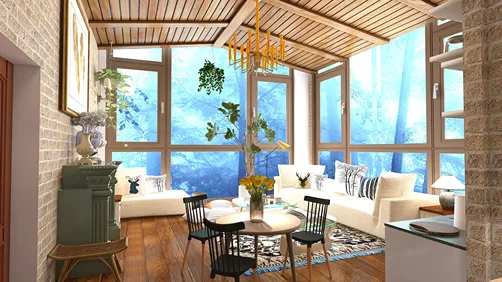
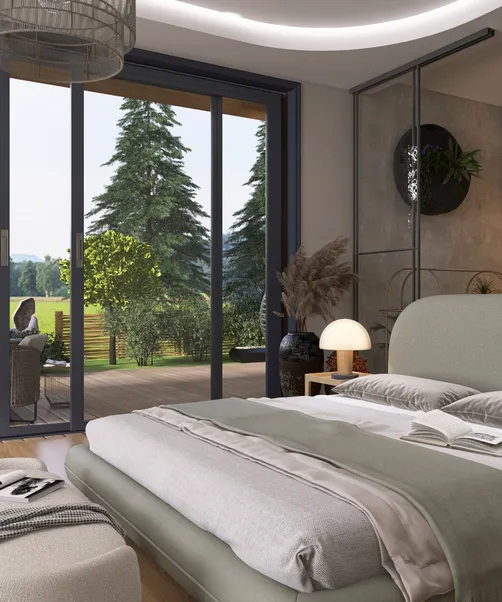
Lis Bador’s 'Forest style space for Web' exemplifies this principle masterfully: she uses tall, slender windows paired with a recessed ceiling plane to channel daylight deep into the compact 37.6 m² living area. In Homestyler, she leveraged the 'sunny_vondelpark' HDR setting to simulate mid-morning clarity, then positioned a minimalist wooden sofa and low-profile coffee table to avoid shadow stacking. Her use of suspended pendant lights with warm-white LEDs (visible in the render) ensures ambient continuity after sunset — demonstrating how Homestyler design techniques support both daylight optimization and seamless day-to-night transition in forest-style indoor space planning.
Start Designing Now🪵 Curate Textures — Less Is More, But Depth Is Key
Authentic forest texture comes from contrast and restraint — not accumulation. Select *one* dominant natural material (e.g., reclaimed oak flooring), *one* secondary tactile element (e.g., hand-thrown ceramic vases or a single stone accent wall), and *one* soft organic layer (e.g., wool rug or linen drapery). Avoid mixing more than three raw materials in one zone. Use Homestyler’s material library filters (e.g., 'wood', 'stone', 'textile') to preview real-time texture scaling and grain direction — critical for avoiding visual noise. Always test material combinations under different lighting presets to ensure tonal harmony, not competition.

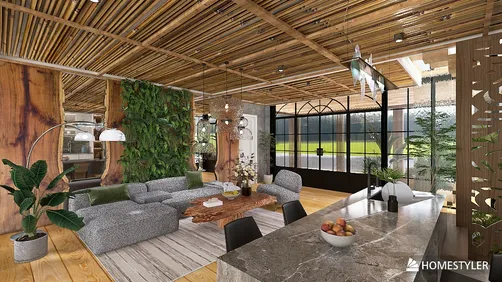
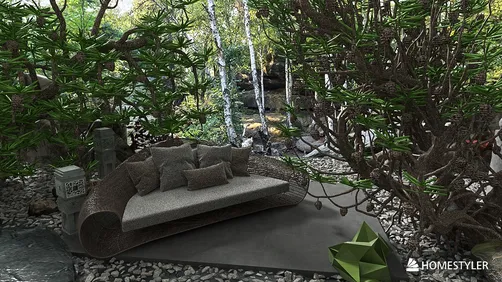
Julie Turner’s 'Forrest Style space for web..' applies this curation rigorously in her courtyard-living hybrid: exposed natural timbers define the structural frame, while smooth river stones anchor the fountain base — no additional stone cladding or tile. The seating features only woven cane chairs and a single textured jute rug, eliminating competing weaves or finishes. Using Homestyler’s real-time material swap tool, she iterated between oak, walnut, and ash wood presets to find the warmest grain that complemented her 'felsenlabyrinth' HDR lighting — proving how disciplined texture selection, guided by Homestyler design techniques, prevents visual fatigue in forest-style indoor space planning.
Create Your Forest Space🌿 Anchor with Living Greenery — Function Before Form
Plants must serve ecological and spatial functions — not just aesthetics. Choose species based on light conditions (e.g., ZZ plants for low-light corners, fiddle leaf figs for sun-drenched zones), air-purifying capacity (NASA Clean Air Study verified), and growth habit (upright for vertical emphasis, cascading for softening edges). Integrate them structurally: built-in planters along window sills or under stairs, suspended macramé hangers above dining tables, or living walls as acoustic buffers. In Homestyler, use the Plant Asset Library (filter by 'indoor plant', 'low light', 'air purifier') and adjust opacity/scale to test density — always aim for breathing room between foliage and key circulation paths.

Amy ✨’s award-winning 'Serenity in Nature' leverages greenery as spatial architecture: bamboo groves outside large windows visually extend the interior, while a dedicated indoor planter wall beside the pool deck acts as a humidity regulator and privacy screen — not merely decoration. She used Homestyler’s plant asset tags ('bamboo', 'air purifier', 'shade tolerant') to auto-filter suitable species, then scaled each model to match real-world growth profiles (e.g., mature height of 3m for bamboo). Her integration demonstrates how Homestyler design techniques enable function-forward planting strategies — turning forest-style indoor space planning into a responsive, wellness-oriented practice.
Begin Your Green DesignFAQ
Q: Do I need professional landscaping knowledge to enter the Forest Style Space for Web challenge?
Not at all. Homestyler provides intuitive drag-and-drop plant assets with built-in care tags (e.g., 'low light', 'pet-safe', 'air purifier'). Focus on composition, scale, and spatial rhythm — not botany.
Q: Can I submit designs for non-residential spaces like offices or cafes?
Yes — the contest welcomes any interior space where forest aesthetics enhance human experience. Entries include forest-themed co-working lounges and wellness clinics, validated via Homestyler’s commercial asset library and lighting presets.
Q: How does Homestyler help me avoid 'too many plants' clutter?
Use the 'Plant Density Preview' toggle in Render Settings to visualize foliage volume in real time. Combine with the 'Material Contrast Analyzer' (found under Tools > Analysis) to flag overlapping textures — a core Homestyler design technique for clean forest-style indoor space planning.
Q: Are there pre-built forest-style templates I can customize?
Absolutely. Visit the Homestyler Model Library (contest URL: https://www. Homestyler.com/modelLibrary/detail/597) for certified 'Forest Space' floorplans, curated material palettes, and HDR lighting kits — all optimized for quick iteration and professional presentation.
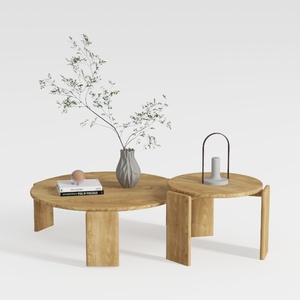
Minimalist Solid Wood Round Nesting Coffee Tables 3D Model
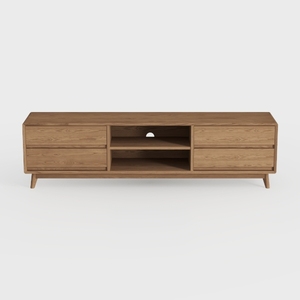
Mid Century Modern Solid Oak TV Stand With Storage Drawers 3D Model
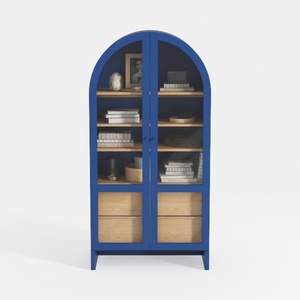
Modern Blue Frame Solid Wood Arched Glass Display Cabinet 3D Model
Homestyler offers an easy-to-use online design tool, stunning 3D renderings, and plenty of interior decor projects. Whether you’re a beginner or an experienced designer, its DIY video tutorials and extensive features help you create beautiful home designs effortlessly.
Design Now for FREE