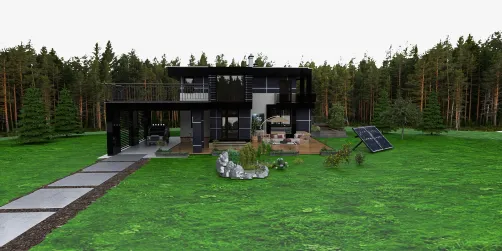
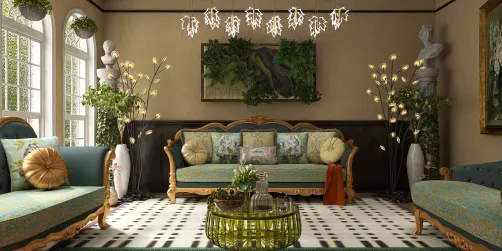
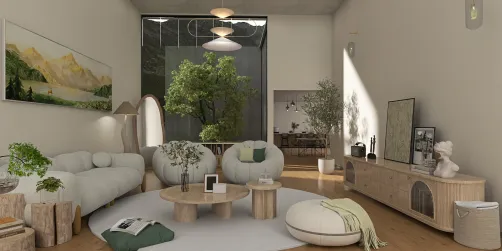
Forest-Style Living Space Design
The 'Forest-Style Living Space' is a nature-infused interior design concept that transforms residential living areas—especially open-plan living rooms, combined living-dining zones, and biophilic lounges—into serene, earth-connected environments. Drawing inspiration from woodland aesthetics, it emphasizes organic textures (raw wood, stone, rattan), abundant indoor greenery, soft natural lighting, and warm neutral palettes. Unlike generic 'green' decor, forest-style design prioritizes spatial harmony with nature: layered plantings, tactile material contrasts, and intentional visual depth through vertical gardens or canopy-like ceiling treatments. This scene transcends seasonal trends—it supports wellness-oriented indoor space planning by reducing visual clutter, enhancing air quality perception, and grounding occupants through biomimetic forms and rhythms.
Design Challenges & Common Pitfalls
Achieving authentic forest-style ambiance without compromising functionality or spatial clarity is deceptively complex. Key challenges include: overloading with plants (risking visual chaos or maintenance strain), mismatched material scales (e.g., oversized timber beams in compact rooms), poor light integration (dimming natural glow essential for botanical vitality), and neglecting human-centric flow—where furniture arrangement competes with greenery instead of coexisting. Many designers also underestimate acoustics: hard surfaces amplify echo, undermining the intended calm, while excessive soft furnishings may mute beneficial natural soundscapes like rustling leaves. Successful forest-style living spaces require disciplined layering—not just adding nature, but curating its presence within intelligent indoor space planning.
🌿 Prioritize Biophilic Layering Over Plant Quantity
True forest-style design relies on strategic layering—not density. Use vertical planes (wall-mounted planters, hanging vines), mid-height accents (ferns on sideboards, sculptural monstera beside sofas), and ground-level anchors (potted fiddle-leaf figs or olive trees) to create dimensional depth. Integrate natural textures deliberately: linen upholstery, unfinished oak coffee tables, and cork or jute rugs reinforce tactility without overwhelming. Avoid uniform green; mix leaf shapes, heights, and tones (deep emerald, silvery sage, variegated cream) to mimic woodland diversity. Homestyler’s real-time 3D rendering helps preview scale and proportion before physical placement—critical for avoiding ‘plant overcrowding’ in tight corners or walkways.

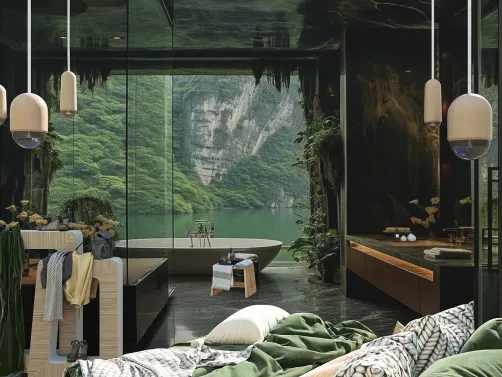
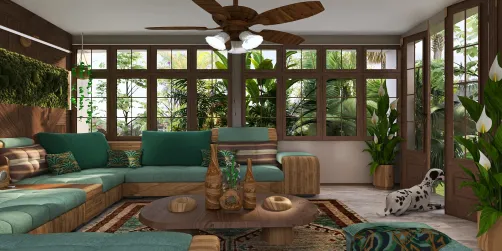
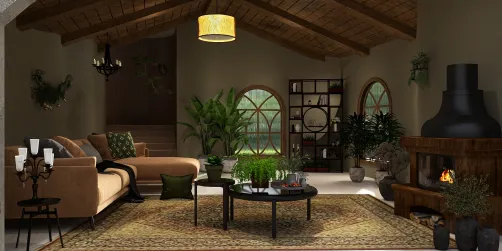
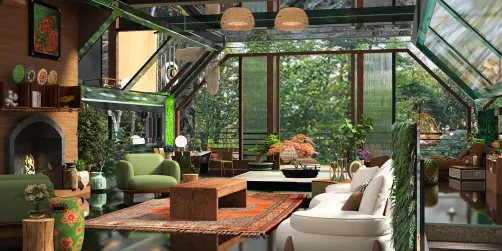
Arwen Arianus🎨🎸🏰’s 'The View' demonstrates biophilic layering masterfully: a low-slung sofa anchors the foreground, while a tall, slender yucca and cascading pothos on a floating shelf define mid and upper zones. She uses reclaimed wood flooring and a woven jute rug—not as isolated elements, but as cohesive textural threads. Using Homestyler AI design tools, she simulated sunlight angles across the day to position plants where they’d thrive—not just look lush—proving how digital prototyping elevates ecological intentionality in forest-style living space planning.
Start Designing Now🪵 Anchor with Natural Material Hierarchy & Warm Neutrals
Select one dominant natural material (e.g., walnut for cabinetry or oak for flooring) and limit secondary materials to two complementary types (e.g., stone accent wall + linen drapery). Avoid competing grains or finishes—matte wood pairs with honed stone, not glossy granite. Palette-wise, anchor with warm neutrals: oat, taupe, mossy grey, and toasted beige—never cool greys or stark whites, which undermine forest warmth. Introduce subtle earthy accents (terracotta cushions, amber glass vases) sparingly. Homestyler’s material-swapping tool enables rapid A/B testing of wood species and finish tones—ensuring cohesion before procurement, a core Homestyler design technique for risk-free material selection.

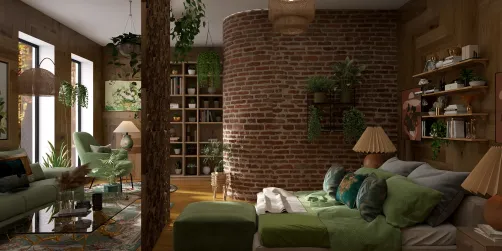
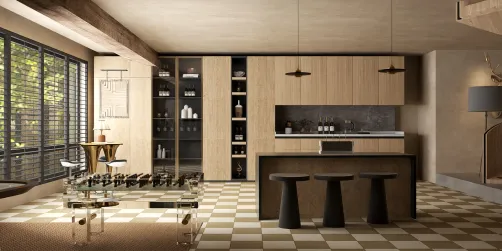
Rosi Stamile’s 'Comedor' applies strict material hierarchy: light oak dining table and matching ladder-back chairs form the base layer; a single textured stone-clad accent wall adds grounded contrast; linen-upholstered banquettes and woven pendant lights provide soft, warm neutrality. She used Homestyler’s AR virtual furniture placement to verify chair spacing around the table *with* potted palms nearby—ensuring circulation wasn’t compromised. This exemplifies how Homestyler design techniques resolve the classic tension between aesthetic richness and functional clarity in forest-style indoor space planning.
Create Your Forest Space☀️ Maximize & Diffuse Natural Light as a Living Element
Natural light isn’t just illumination—it’s a dynamic design component in forest-style spaces. Prioritize window access: use sheer, plant-filtered curtains (not heavy drapes), install mirrors opposite windows to bounce light into foliage zones, and avoid tall furniture blocking glazing. For rooms with limited sun, supplement with full-spectrum LED fixtures mimicking daylight (3500K–4500K CCT) and directional uplighting to highlight textured walls or tree canopies. Homestyler’s lighting simulation lets designers preview shadow patterns and plant-light interaction at different times—essential for ensuring both human comfort and botanical health in the same zone.

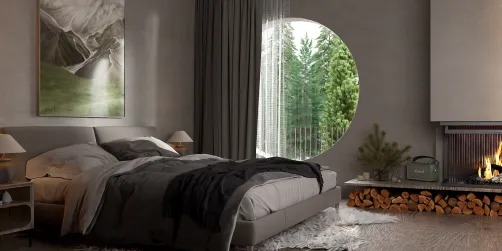
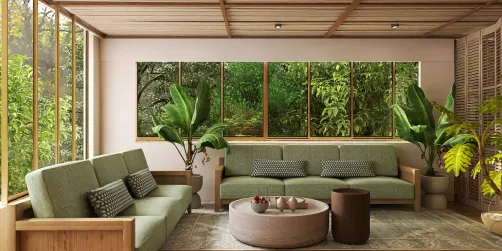
saemi kim’s 'Nature's Embrace' leverages light as a living element: floor-to-ceiling windows flood the space, while a sheer ivory curtain diffuses glare without dimming intensity. She placed a black velvet sofa *away* from direct sun to prevent fading—but positioned trailing philodendron and bird’s nest ferns directly in the path of morning light, verified via Homestyler’s time-of-day lighting preview. Her use of Homestyler AI design tools underscores how digital simulation transforms passive lighting into an active, responsive layer—core to holistic forest-style indoor space planning.
Begin Free DesignFAQ
Q: Can forest-style design work in small apartments or low-light urban units?
Yes—focus on vertical greenery (wall planters, hanging macramé), reflective surfaces (mirrored backsplashes, light oak floors), and compact, high-impact plants (ZZ plant, snake plant, peperomia). Homestyler design techniques let you test scaled layouts and lighting simulations before committing.
Q: How do I balance 'wild' forest aesthetics with modern clean lines and minimalism?
Select streamlined furniture (low-profile sofas, tapered-leg tables) in natural finishes—then layer texture *only* through organic elements: a single statement wood slab coffee table, hand-thrown ceramic vases, or a living moss wall panel. Avoid ornate carvings or busy patterns.
Q: What Homestyler tools are most effective for refining forest-style projects?
Use Real-Time 3D Rendering to iterate plant placement and material combos instantly; leverage AR Virtual Furniture Placement to validate traffic flow amid greenery; and apply Lighting Simulation to optimize both human circadian needs and plant photoperiod requirements—making Homestyler design techniques indispensable for evidence-based forest-style indoor space planning.

Rustic Solid Oak Round Coffee Table Unique Geometric Base 3D Model
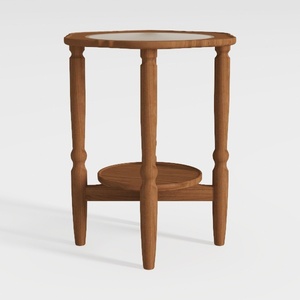

Minimalist Solid Wood Marble Top Round Side Table 3D Model

Minimalist Tan Leather L-Shaped Sectional Sofa 3D Model
Homestyler is an easy-to-use online home design platform offering powerful 3D rendering, a vast collection of interior design projects, and helpful DIY video tutorials. It’s perfect for bringing your home design ideas to life effortlessly and creatively.
Zaprojektuj teraz za darmo