Doll-Integrated Living Space Design
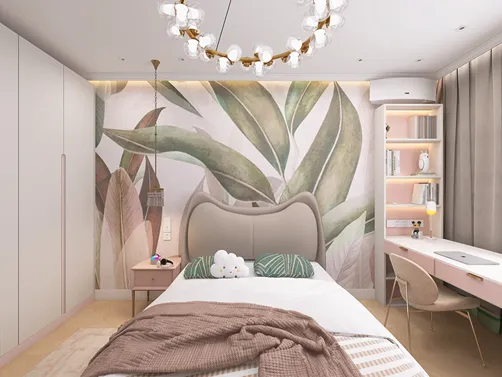
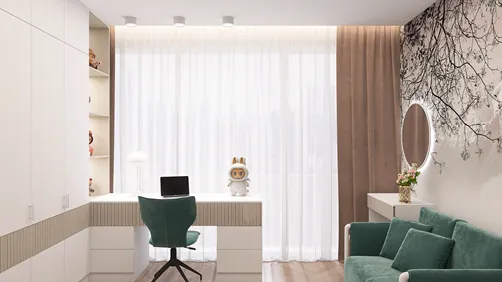
The 'Doll-Integrated Living Space' is a human-centered interior concept that transforms dolls from nostalgic artifacts into active emotional regulators within adult-oriented environments. Unlike traditional children's bedrooms, this scene emphasizes psychological comfort, memory resonance, and aesthetic harmony—where dolls coexist with functional furniture not as decorative afterthoughts, but as curated design elements that anchor warmth, playfulness, and calmness. It spans diverse spatial scales—from compact 11.5 m² sanctuaries to expansive 98 m² multi-functional zones—and integrates thematic doll collections (e.g., Marine Adventure, Nestling Russia, Ne Zha) as narrative drivers for color, texture, and layout. Central to this design is the principle of 'emotional layering': using soft lighting, tactile materials, rhythmic display rhythms, and intentional negative space to balance energetic vibrancy with restorative stillness—making it highly relevant to contemporary needs in indoor space planning and mindful home curation.
Design Challenges & Common Pitfalls
Designers frequently struggle with three interrelated challenges in doll-integrated spaces: (1) Visual clutter—overcrowding shelves or surfaces with dolls dilutes emotional impact and disrupts spatial flow; (2) Scale dissonance—mismatched doll proportions relative to furniture (e.g., oversized collectibles beside petite daybeds) break compositional harmony; and (3) Functional compromise—prioritizing doll display over ergonomics (e.g., blocking circulation paths with open shelving or placing fragile pieces within reach of high-traffic zones). These issues are amplified in small-footprint interiors, where every centimeter demands dual-purpose resolution—highlighting why precise indoor space planning and Homestyler design techniques are indispensable for balancing aesthetics, emotion, and usability.
✅ Harmonious Scale & Proportion
Dolls must relate meaningfully to surrounding furniture—not as isolated objects, but as scaled participants in the room’s visual hierarchy. Ideal integration uses the 60-30-10 rule: 60% dominant furniture (e.g., bed, sofa), 30% secondary elements (e.g., ottomans, low dressers), and 10% doll-based accents (e.g., curated vignettes on ledges, recessed niches, or integrated into headboard cutouts). Avoid uniform alignment; instead, stagger heights and depths to create gentle rhythm—mirroring how Homestyler’s real-time 3D rendering helps test sightlines and spatial perception before physical execution.

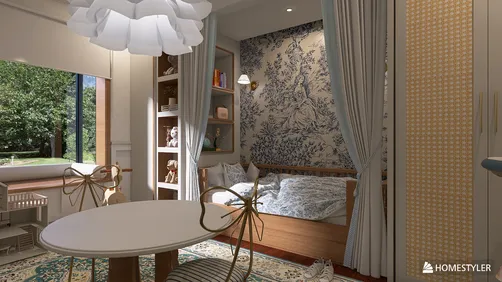
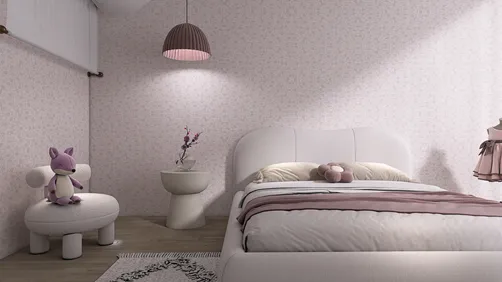
Kholod T’s 'Playful Comfort Room🧡💫' masterfully applies proportional harmony: dolls are grouped at three distinct vertical tiers—on floating shelves aligned with bed height, nestled inside a rounded wall niche at eye level, and softly embedded in a textured rug border near floor level. This layered elevation avoids monotony while preserving clear circulation. Using Homestyler’s drag-and-drop scaling tools and instant sunlight simulation, Kholod precisely calibrated each doll’s visual weight against the floral wallpaper and curved architecture—demonstrating how Homestyler design techniques transform abstract proportion theory into tangible, emotionally resonant indoor space planning.
Start Free Design🎨 Intentional Emotional Zoning
Divide the space into complementary emotional zones: an 'Energy Zone' (e.g., play nook, reading corner) with vivid hues, kinetic shapes, and interactive doll arrangements; and a 'Calm Zone' (e.g., sleeping area, meditation seat) with muted tones, organic forms, and minimal, grounded doll placements (e.g., single matryoshka on a nightstand, or Ne Zha figurine centered on a low altar shelf). Transition between zones using gradient lighting, textural thresholds (e.g., plush rug → smooth hardwood), or subtle color bleed—enabling adults to shift mental states without leaving the room. This zoning strategy is foundational to effective indoor space planning for emotional well-being.

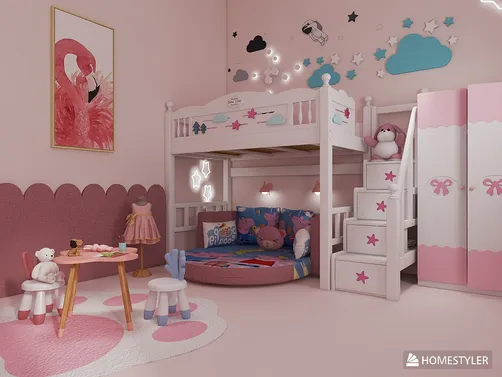
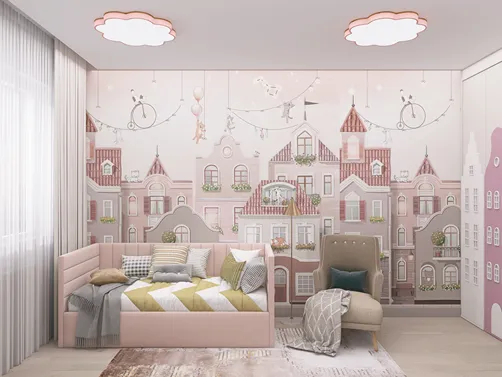
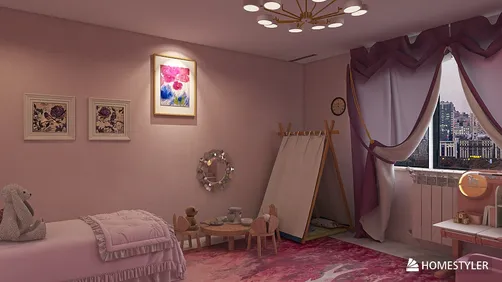
Jazmin Abasto-Ruggeri’s 'Little Girl's Pink Oasis' exemplifies emotional zoning: the left side features a vibrant teepee + Marine Adventure dolls under dynamic pendant light (Energy Zone), while the right side centers a serene, low-canopy bed flanked by two Lulu Boo dolls on matching ceramic stands—framed by diffused daylight and blush-toned linen (Calm Zone). Jazmin leveraged Homestyler’s zone-based material override and HDR lighting presets ('g_ljz_day') to simulate how light shifts across zones hour-by-hour, ensuring the transition felt natural—not jarring—a hallmark of advanced Homestyler design techniques for holistic indoor space planning.
Begin Cozy Design✨ Curated Narrative Display
Each doll grouping should tell a micro-story—whether cultural (Nestling Russia matryoshkas echoing heritage), ecological (Marine Adventure figures arranged along a wave-shaped shelf), or mythic (Ne Zha poised mid-leap above a red lacquered console). Use consistent framing devices: unified backdrops (e.g., custom-printed wallpaper panels), repeating materials (e.g., all bases in matte terracotta), or directional cues (e.g., all dolls facing inward toward a central mirror). This narrative cohesion prevents randomness and elevates dolls from knick-knacks to meaningful interior characters—enhancing both aesthetic integrity and psychological resonance in any indoor space planning project.

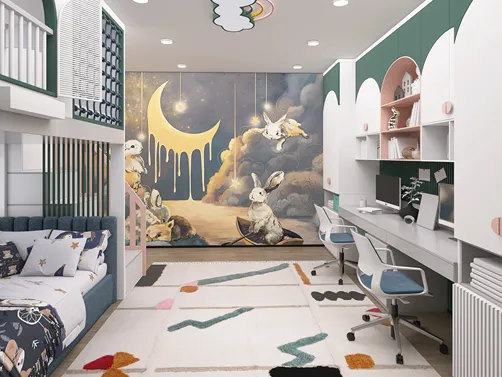
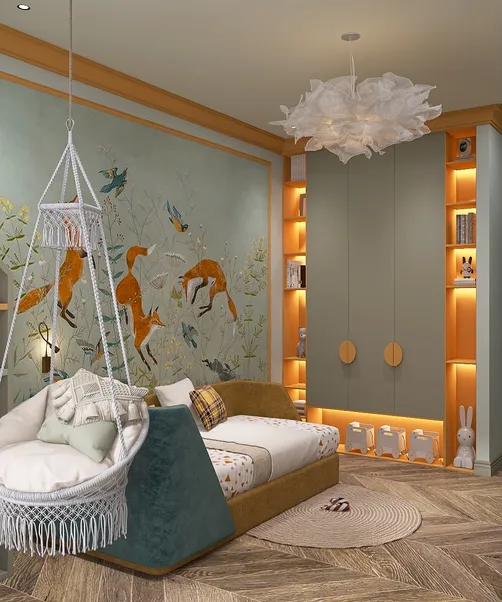
Synthia 00’s 'A Dreamy Playroom' builds narrative through thematic clustering: Polar Regions dolls inhabit a frost-blue alcove with faux-fur throws and ice-textured wallpaper, while Garden Paradise figures bloom across a botanical mural behind a white daybed. Synthia used Homestyler’s AI-powered 'Theme Match' tool to auto-generate coordinating textures and lighting filters—then manually refined doll poses and shadow angles in the 3D viewport to reinforce story logic (e.g., polar bears 'looking toward' the icy zone). This fusion of AI efficiency and human storytelling makes Homestyler design techniques uniquely powerful for executing complex, emotionally intelligent indoor space planning.
Launch Dream SetupFAQ
Q: Do I need professional interior design experience to participate in the Doll Room for Web contest?
Not at all! The contest welcomes designers of all levels—including beginners. Homestyler’s intuitive drag-and-drop interface, AI-assisted furniture placement, and real-time 3D rendering make it easy to experiment with doll-integrated layouts—even without formal training in indoor space planning.
Q: Can I use my own doll models, or am I limited to the provided collection (e.g., Ne Zha, Lulu Boo)?
The contest encourages creativity with its official model library—including Marine Adventure, Garden Paradise, Polar Regions, Nestling Russia, Lulu Boo, and Ne Zha—but Homestyler also supports custom uploads. Just ensure your designs prioritize emotional resonance and furniture integration, core to successful indoor space planning.
Q: How does doll placement affect the perceived size of a small room?
Strategic doll placement enhances spaciousness: use vertically stacked displays (e.g., tall narrow shelves), reflective surfaces behind groupings, and monochromatic doll palettes to recede visually. Avoid floor-level clusters in tight rooms—elevate them. Homestyler design techniques like sun-path simulation and camera-angle previews help test these spatial illusions before finalizing.
Q: Are there accessibility considerations when designing doll-integrated spaces for adults?
Yes—especially for aging users or those with mobility needs. Prioritize ground-level doll zones with non-slip bases, avoid protruding shelves at waist height, and ensure pathways remain ≥90 cm wide. Many top entries (e.g., Top 1 ‘Um Refúgio Rosa’) use recessed wall niches and low-profile plinths—excellent examples of inclusive indoor space planning supported by Homestyler’s precise measurement tools.


Homestyler offers an easy-to-use online design tool with stunning 3D renderings, inspiring interior projects, and helpful DIY video tutorials. It’s perfect for turning your home design ideas into reality, whether you’re a beginner or an experienced decorator.
Design Now for FREE