Terrace Space Design
A terrace is a large, roofless outdoor platform at ground level—distinct from balconies that cantilever from upper floors. It serves as a vital transitional zone between indoor living and the natural environment, supporting diverse functions: relaxation, social gatherings, al fresco dining, gardening, and even outdoor wellness activities. Unlike patios or courtyards bounded by walls, terraces emphasize openness, spatial flow, and intentional connection to sky, landscape, and light—making them ideal for holistic indoor space planning that extends beyond the threshold.
Design Challenges & Common Pitfalls
Terrace design faces unique constraints: exposure to sun, rain, wind, and temperature fluctuations demands durable, weather-resistant materials; limited structural integration with the main building restricts utility routing (e.g., plumbing for sinks or irrigation, electrical for lighting); zoning regulations may limit height, coverage, or enclosure; and poor orientation can cause glare, overheating, or wind tunnels. Additionally, many designers underestimate microclimate impact—failing to account for heat retention from paving, lack of shade in summer, or insufficient wind buffering—leading to underused spaces despite beautiful aesthetics.
✅ Prioritize Climate-Responsive Zoning
Divide the terrace into functional micro-zones aligned with sun path, wind direction, and daily usage patterns: a shaded lounge zone (east/north-facing or under pergola), a sun-drenched dining zone (south/west with retractable awning), and a sheltered green zone (wind-protected corner for planters or vertical gardens). Use Homestyler’s real-time 3D rendering to simulate seasonal sun angles and test shadow patterns before finalizing layout—ensuring each zone remains comfortable across morning, noon, and evening.

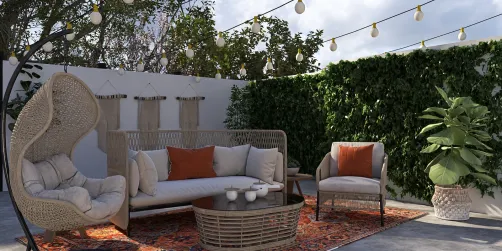
Madjda Bbdlh’s 'terrasse space' demonstrates climate-responsive zoning by clustering wicker lounge seating beneath overhead hanging plants (natural shade + evaporative cooling) while positioning open-air dining elements toward the perimeter for cross-ventilation. Using Homestyler AI design tools, she simulated daylight penetration across hours—adjusting planter height and vine density to optimize dappled shade without compromising visibility or airflow—showcasing advanced indoor space planning applied outdoors.
Start Free Design Now🌿 Integrate Seamless Indoor-Outdoor Flow
Achieve visual and functional continuity between interior and terrace through material harmony (e.g., matching flooring transitions), consistent color palettes, aligned sightlines (frame key garden views from interior windows), and shared design language (e.g., repeating arch motifs or metal finishes). Thresholds should be step-free or minimally raised; sliding glass walls or bi-fold doors maximize opening width. Homestyler’s drag-and-drop model library enables rapid prototyping of threshold treatments and material swaps—accelerating iteration for cohesive spatial storytelling.

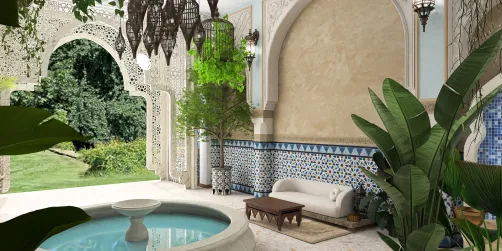
Panchita Paul’s 'A Garden of Lunar Whispers' achieves indoor-outdoor flow not through physical adjacency but through thematic continuity: interior-inspired sculptural lighting (moon-shaped fixtures) echoes decorative ceiling forms common in adjacent living rooms, while reflective surfaces and soft ambient glow mirror indoor layered lighting strategies. Leveraging Homestyler design techniques, she tested over 12 fixture placements and intensities in real time—ensuring nighttime ambiance felt like an extension of the home’s interior mood, not a separate spectacle.
Begin Your Free Design🌱 Optimize Multi-Functional Flexibility
Terraces must serve evolving needs—day vs. night, solo quiet vs. group entertaining, dry season vs. monsoon. Embed flexibility via modular furniture (stackable chairs, nesting tables), convertible surfaces (table-to-planter hybrids), retractable elements (canopies, screens), and smart tech (integrated LED pathways, app-controlled irrigation). Homestyler’s parametric modeling allows designers to save multiple layout variants (e.g., 'Dinner Mode', 'Yoga Mode', 'Garden Party Mode')—enabling clients to visualize adaptability before construction.

Fatima Nadeem Fatima Nadeem’s unnamed coastal terrace design exemplifies multi-functional flexibility: low-profile modular sofas double as planter edging; a central coffee table lifts to reveal built-in storage for cushions or grilling tools; and recessed LED strips under seating activate for evening use without cluttering surfaces. Using Homestyler AI design tools, she ran A/B comparisons of 7 furniture configurations—validating that this layout supports both intimate lounging and 6-person dining within the same footprint—a hallmark of intelligent indoor space planning for compact terraces.
Launch Free DesignFAQ
Q: How does terrace design differ from balcony or patio planning in terms of structural considerations?
Unlike balconies—which require load-bearing cantilevers and strict safety railings—terraces sit at grade and prioritize drainage slope, sub-base stability, and frost-line compliance. Patios often use simpler hardscaping; terraces demand integrated utility planning (gas lines for fire pits, conduit for outdoor kitchens) and may involve retaining walls or grading. Homestyler design techniques help visualize these subsurface systems via layer toggling and cross-section views.
Q: Can Homestyler AI generate terrace layouts compliant with local zoning laws (e.g., setback requirements or height limits)?
Homestyler does not auto-validate legal compliance—but its precise measurement tools, annotation layers, and exportable dimensioned plans empower designers to manually overlay municipal code overlays (e.g., 3m rear setback zones). Top contestants like Alaa’ J.M. used Homestyler’s scale-lock and grid snapping to ensure pool placement respected her country’s minimum terrace-to-boundary distances before submission.
Q: What are the top three Homestyler design techniques for testing terrace usability before build?
1) Sun-path animation to verify shade coverage at 9am/1pm/5pm year-round;
2) Real-time material swatch testing for thermal performance (e.g., comparing light travertine vs. dark basalt surface temps);
3) Interactive furniture drag-and-drop with collision detection—ensuring 60cm circulation paths remain unobstructed per universal design standards.

Bohemian Rattan Round Coffee Table 3D Model
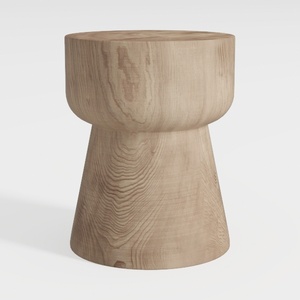
Minimalist Solid Wood Round End Side Table 3D Model

Realistic Police Patrol Car 3D Model
Homestyler offers an easy-to-use online home design tool with stunning 3D renderings, inspiring design projects, and helpful DIY video tutorials. It’s perfect for bringing your interior decoration ideas to life quickly and creatively.
Design Now for FREE