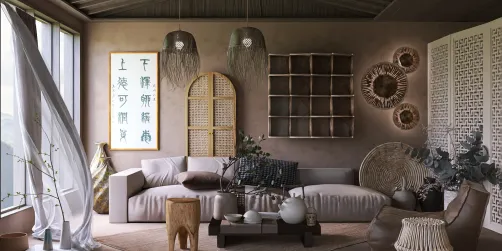
Chinese Wabi-Sabi Living Space Design
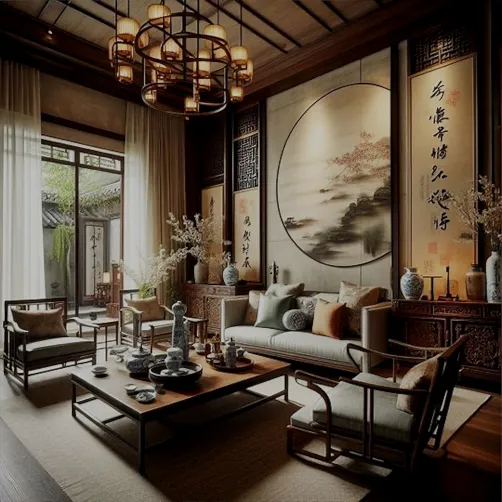
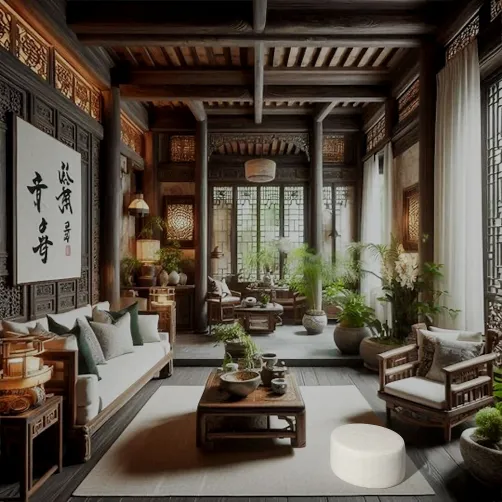
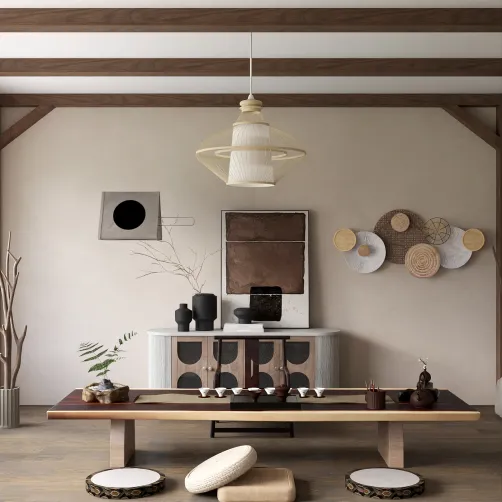
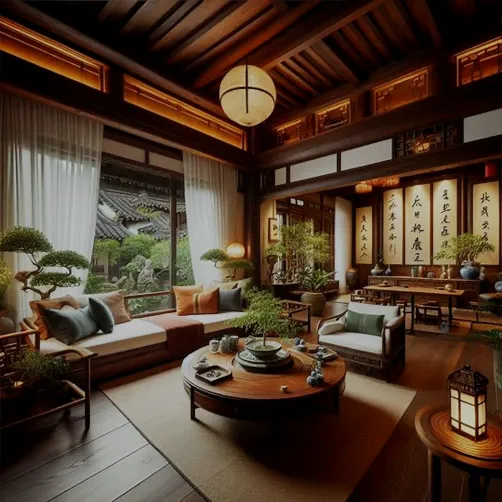
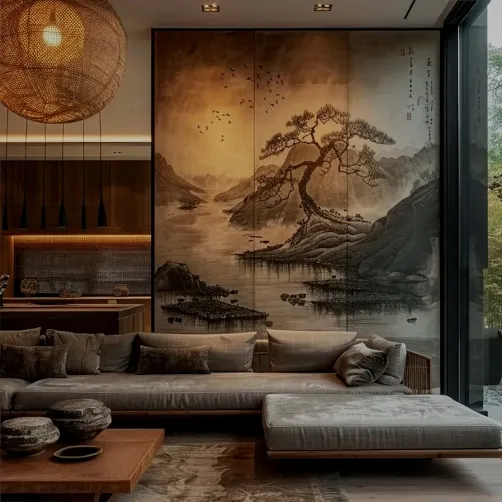
The Chinese wabi-sabi living space is a harmonious fusion of traditional Chinese aesthetics and the Japanese philosophy of wabi-sabi — embracing imperfection, transience, and natural simplicity. This design scene transcends conventional room typologies (e.g., living room, bedroom, or dining area) to represent a holistic, meditative interior environment. It prioritizes tranquility, material authenticity (such as raw wood, handmade ceramics, and unbleached linen), subtle tonal palettes (earthy beiges, soft greys, muted greens), and intentional emptiness — all supporting mindful indoor space planning. As showcased across top contest entries, it’s not just about furniture placement but about cultivating atmosphere: light filtering through shoji-inspired screens, asymmetrical composition, tactile textures, and curated negative space that invites calm and reflection.
Design Challenges & Common Pitfalls
Achieving authentic Chinese wabi-sabi balance is deceptively complex. Key challenges include avoiding sterile minimalism (which contradicts wabi-sabi’s warmth), overloading with decorative ‘Asian’ motifs (undermining subtlety), misusing natural materials (e.g., glossy engineered wood instead of visible grain and texture), and neglecting spatial hierarchy — especially in compact layouts where clutter-free serenity must coexist with functional storage. Another frequent issue is poor lighting integration: wabi-sabi relies on layered, diffused, and warm-toned ambient light, yet many designers default to harsh overhead fixtures that disrupt the intended tranquility. Thoughtful indoor space planning — including zoning, circulation flow, and scale-sensitive furnishing — is essential but often overlooked in pursuit of aesthetic trends.
🌱 Embrace Imperfect Natural Materials
Wabi-sabi celebrates the beauty of the handmade, aged, and organic. Prioritize unfinished woods with visible knots and grain, hand-thrown ceramics with irregular glazes, woven rattan or bamboo, and linen or hemp textiles with subtle slubs and variations. Avoid synthetic substitutes or overly polished surfaces — authenticity lies in tactile honesty. These materials age gracefully and deepen character over time, reinforcing the philosophy of transience and grounded presence.

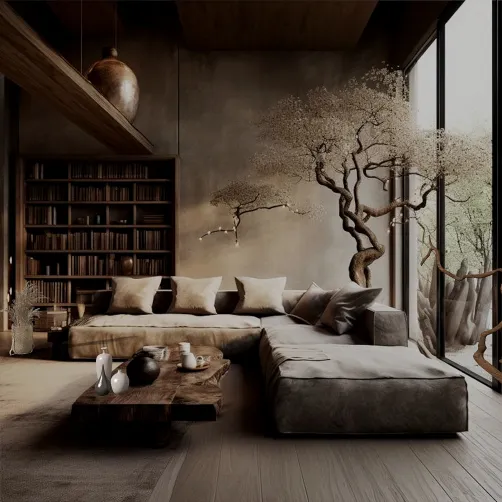
Designer mari voronina (‘design-ideas-mobile’) masterfully applies this principle in her cozy living room. She selects a deeply textured, low-profile sectional sofa in natural linen and pairs it with a live-edge wooden coffee table and handwoven floor rug — all rendered with Homestyler’s photorealistic 3D visualization to highlight material nuance. Using Homestyler Design Tips, she adjusts lighting angles to accentuate wood grain and fabric weave, proving how AI tools can validate tactile authenticity before physical execution.
Start Free Design🕯️ Curate Light & Shadow Intentionally
Light is not merely functional in wabi-sabi spaces — it’s compositional. Favor indirect, layered illumination: recessed cove lighting, paper-shade floor lamps, wall sconces with warm CCT (2700K–3000K), and abundant natural light filtered through translucent screens or sheer linen curtains. Shadows should be soft, dynamic, and purposeful — evoking quiet contemplation rather than stark contrast. This requires precise indoor space planning: fixture placement must align with architectural features, seating zones, and focal points like scroll paintings or bonsai displays.

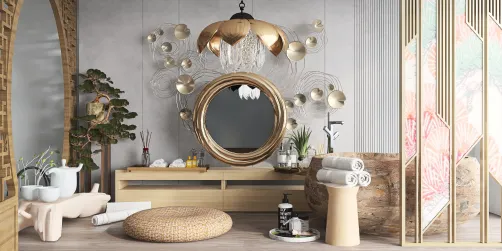
J L (‘Fusion orientale’) demonstrates refined light curation by integrating a custom wooden lattice partition that diffuses daylight while casting gentle, rhythmic shadows across the floor. Her Homestyler AI model uses real-time shadow simulation to test multiple sun angles throughout the day — a critical Homestyler Design Tip for achieving atmospheric depth without glare. The result feels both anchored and ethereal, embodying wabi-sabi’s reverence for time and change.
Begin Your Free Design🌀 Honor Asymmetry & Thoughtful Emptiness
Symmetry implies perfection and control; wabi-sabi embraces asymmetry (fukinsei) as a mark of organic life. Arrange furniture, art, and objects off-center — e.g., a single scroll painting slightly left of a shōji screen, or a ceramic vase placed at the third point of a floating shelf. Equally vital is ‘ma’ — the conscious use of empty space. Negative space isn’t void; it’s breathing room that directs attention, enhances stillness, and supports mental clarity. This demands disciplined indoor space planning: every object must earn its place, and circulation paths must feel generous, not tight.

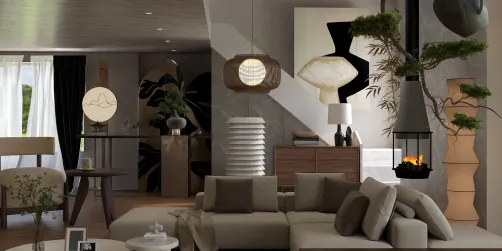
Alice Ljungsvik (‘Wabi-sabi’) exemplifies asymmetry and ma in her serene living space: a low platform sofa sits offset from a freestanding wooden screen, while a single ikebana arrangement rests alone on a narrow sideboard — surrounded by ample floor and wall space. Using Homestyler’s drag-and-drop spatial tools, she iterated over 12 layout versions to perfect visual weight distribution and sightlines. Her process underscores how Homestyler Design Tips empower intuitive yet precise indoor space planning — turning philosophical ideals into measurable, renderable reality.
Launch Your Free DesignFAQ
Q: How does Chinese wabi-sabi differ from standard minimalism?
Chinese wabi-sabi goes beyond visual reduction — it emphasizes sensory richness (texture, warmth, patina) and cultural resonance (Confucian harmony, Daoist flow, Zen stillness). Minimalism often seeks neutrality; wabi-sabi seeks soulful imperfection.
Q: Can I apply Chinese wabi-sabi principles in a small apartment?
Absolutely — in fact, compact spaces benefit most. Focus on multi-functional natural-material furniture, vertical greenery, sliding or folding partitions, and strategic mirror placement to amplify ‘ma’. Homestyler’s room-scale AI modeling helps simulate spatial perception before renovation.
Q: Which Homestyler Design Tips are most helpful for wabi-sabi projects?
Use Real-Time 3D Rendering to preview material textures under varying light, leverage Smart Furniture Arrangement for asymmetric zoning, and apply the ‘Material Inspector’ tool to compare grain depth, reflectivity, and aging behavior of wood or stone options — all critical for authentic indoor space planning.

Minimalist Solid Wood Wavy Room Divider Screen 3D Model
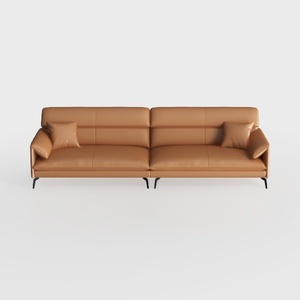
Modern Minimalist Tan Leather Living Room Sofa 3D Model
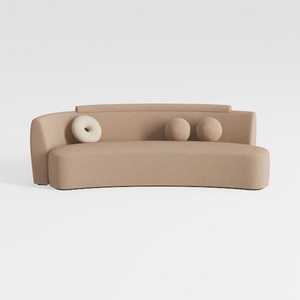

Yozma Curved Chenille Sectional Sofa Beige, Dual D
Homestyler is a user-friendly online platform offering powerful home design tools, realistic 3D renderings, inspiring design projects, and helpful DIY video tutorials. It makes creating and visualizing your dream space simple and enjoyable for everyone.
تصميم الآن مجانا