Home Study Space Design
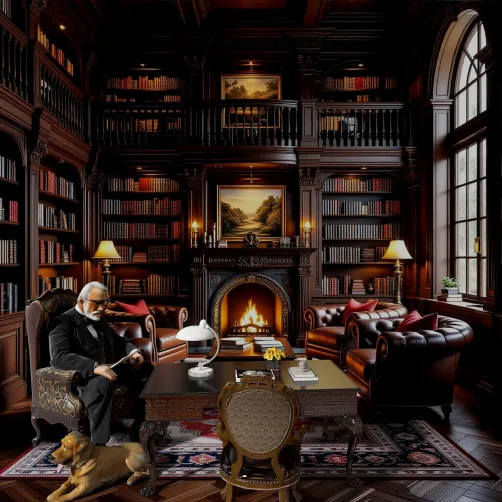
A home study space is a dedicated interior zone designed for focused work, reading, learning, and creative thinking—blending functionality with personal expression. Unlike generic home offices, it emphasizes intellectual calm, cultural resonance, and aesthetic harmony, often integrating regional architectural motifs, traditional materials, or natural elements (e.g., Gothic bookshelves from Ukraine, vintage American library warmth, or Mediterranean light optimization). Successful home study spaces balance ergonomic efficiency with soulful ambiance—serving equally as a workspace, sanctuary, and reflection of identity.
Design Challenges & Common Pitfalls
Key challenges include conflicting functional demands (e.g., storage vs. openness), poor lighting planning (leading to eye strain), insufficient acoustic control in open-plan homes, spatial constraints in small apartments, and over-prioritizing aesthetics at the expense of ergonomics. Many designers also underestimate how crucial indoor air quality, biophilic integration (e.g., greenery placement), and smart furniture arrangement are for sustained focus—especially when leveraging Homestyler design tools for rapid iteration and real-time 3D rendering validation.
✅ Prioritize Ergonomic Zoning & Flow
Divide the study into intuitive zones: a primary work zone (desk + task lighting + monitor setup), a secondary contemplation zone (armchair + floor lamp + bookshelf), and a utility zone (storage + cable management). Maintain clear circulation paths (min. 90 cm width) and align desk orientation with natural light sources to reduce glare. Use Homestyler’s AI-powered furniture layout feature to simulate movement flow and test multiple configurations before finalizing—ensuring seamless indoor space planning.

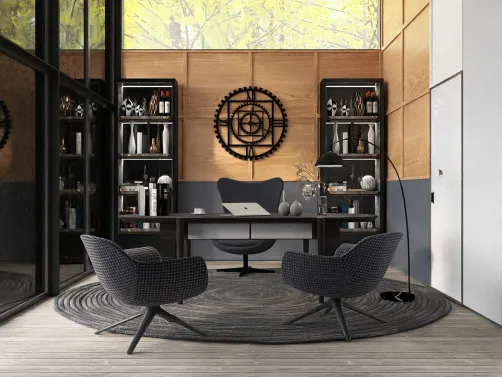
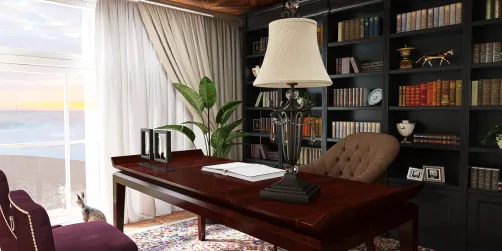
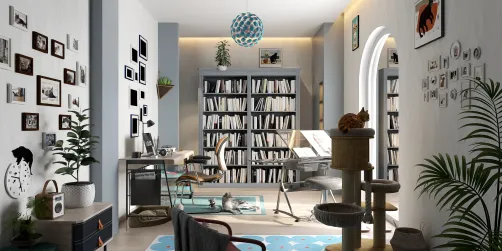
Designer slman🎀 Al-Arifi’s unnamed study demonstrates ergonomic zoning by placing the wooden desk near the window for daylight access, flanked by a vertical bookshelf for vertical storage efficiency and a compact side table for secondary tasks—proving how Homestyler AI design tools enable precise spatial calibration even in compact apartment layouts.
Start Free Design🌿 Integrate Biophilic & Cultural Elements Thoughtfully
Incorporate living greenery (e.g., snake plants or ZZ plants near desks), natural textures (wood, stone, linen), and regionally inspired details—such as Ukrainian gothic arches, Italian chandeliers, or Trinidadian warm-toned woodwork. These elements improve air quality, reduce stress, and anchor the space in cultural authenticity. Use Homestyler’s material swap and style filter tools to rapidly prototype local motifs while maintaining cohesive interior space planning.

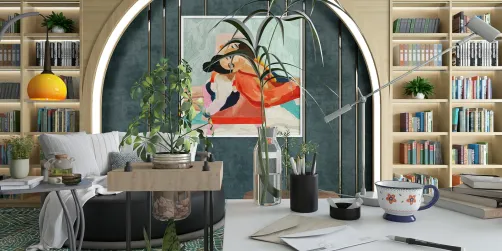
V’s 'A Serene Workspace' blends Scandinavian minimalism with biophilic warmth—using light oak flooring, a live-edge desk, potted monstera, and soft wool rug. The designer leveraged Homestyler’s real-time 3D rendering to adjust plant placement for optimal light exposure and visual rhythm, showing how cultural simplicity and nature coexist in effective home study space design.
Begin Your Free Design💡 Optimize Light, Acoustics & Visual Hierarchy
Layer lighting: ambient (ceiling fixture), task (adjustable desk lamp), and accent (bookshelf LED strips). Use matte finishes and fabric upholstery to absorb sound; position bookshelves as partial room dividers for acoustic buffering. Establish visual hierarchy via scale contrast (e.g., tall cabinet vs. low sofa) and color anchoring (deep accent wall behind desk). Homestyler’s lighting simulation and material preview features help validate luminance levels and acoustic texture choices pre-build.

Shalima Mohammed Thomas’s 'A Calming Home Study' uses a dark walnut desk as a visual anchor, layered lighting (pendant + desk lamp + shelf LEDs), and deep navy walls to create depth and reduce visual noise. She used Homestyler design techniques to iterate lighting angles and shadow patterns—ensuring no glare on screen surfaces while preserving a scholarly, serene mood ideal for long-duration focus.
Launch Free DesignFAQ
Q: How can I adapt a small apartment corner into a functional home study without sacrificing style?
Use vertical storage (floor-to-ceiling shelves), fold-down or wall-mounted desks, and multi-functional furniture (e.g., ottoman with hidden storage). Prioritize light-colored finishes and strategic mirrors to enhance perceived space. Homestyler’s AI room planner helps visualize compact layouts and test sightlines—key for effective indoor space planning.
Q: What’s the best way to incorporate cultural elements without making the study feel cluttered or themed?
Select one signature motif—like Ukrainian carved wood detailing, Italian terracotta tiles, or Mexican Talavera accents—and repeat it subtly across 2–3 elements (e.g., frame, drawer pull, ceramic planter). Let neutral backdrops (linen, plaster, oak) provide breathing room. Homestyler design tips suggest using the ‘Style Match’ tool to harmonize regional pieces with existing palettes.
Q: Can Homestyler really help me evaluate ergonomics before building?
Absolutely. Its real-time 3D rendering includes human avatar scaling, interactive furniture rotation, and dynamic lighting simulation—allowing you to verify desk height relative to seated posture, monitor distance, and task-light coverage. This is essential for avoiding fatigue and optimizing long-term home study space usability.

Minimalist Solid Pine Wood Bookshelf with Storage Baskets 3D Model

Minimalist Solid Wood Home Office Desk with Storage Hutch 3D Model


Minimalist Solid Wood Kids Play Table with Storage 3D Model
Homestyler offers an easy-to-use online design tool with stunning 3D renderings, inspiring interior projects, and helpful DIY video tutorials. It’s the perfect platform to visualize and create your dream home design with confidence and creativity.
Concevez maintenant gratuitement