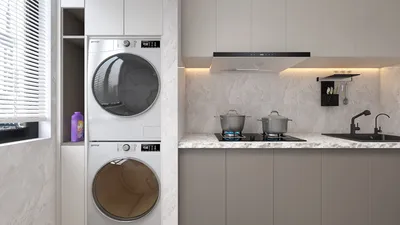


I once almost applied the wrong finish to a client’s butcher block countertop because she wanted it to be "pet-proof"—what she truly meant was that it should be easy to clean rather than indestructible. This little misunderstanding made me realize the importance of visualizing finishes and wear patterns before finalizing decisions, leading me to start every project by creating 3D representations of layouts, which helps identify potential issues early, especially when using tools like Homestyler for visualization.
1) Combine butcher block with matte cabinetry to achieve a modern-rustic aesthetic
I enjoy pairing warm wooden tops with matte, subdued cabinets—think black, deep green, or soft gray—to create a high-end yet comfortable contrast. This combination provides instant warmth and works well with mid-century or contemporary styles; however, be aware that lighter woods might show water marks more easily, so it's important to choose a durable finish.
2) Extend the butcher block countertop to create a multifunctional island or breakfast bar
By creating an overhang on the butcher block, you can provide a cozy breakfast nook and additional prep space. This design is budget-friendly since one slab serves dual purposes, although its weight may necessitate reinforced support—consider a laminated edge for additional durability.
save pin
3) Use butcher block to delineate areas in open-plan kitchens
In open-concept designs, a continuous length of butcher block can subtly define the kitchen area without the need for heavy partitions. It’s an effective way to soften modern finishes while enhancing ergonomics to optimize kitchen workflow. Just be sure to plan where appliances will sit to prevent water splashes from reaching untreated seams.
save pin
4) Pair butcher block with tile backsplashes or stainless elements for both contrast and durability
If you're fond of wood but have concerns about splashes, consider complementing the butcher block with an easy-to-clean backsplash, such as subway tiles, textured ceramics, or stainless steel. This combination appears intentional and functional; however, make sure to account for expansion gaps where wood meets tile to allow for proper aging of the joints.
save pin
5) Opt for reclaimed wood or edge-grain for unique character and cost-effectiveness
Using reclaimed wood or edge-grain butcher block can provide a rich patina and lasting durability while also being budget-conscious—edge-grain is particularly resilient against knives and general wear. If you prioritize layout planning from the start, it becomes easier to draft your floor plan to scale and identify where seams and joints will be most natural.
save pin
Tips 1:
Cost-saving advice: consider purchasing a thinner slab for upper cabinets while reserving thicker sections for islands—this strategy helps save on both cost and weight. For maintenance, maintain a regular oiling routine and keep a cutting board handy to avoid using the entire counter as a chopping surface.
save pin
FAQ
Q1: Are butcher block countertops durable?
Butcher block can be surprisingly robust when properly treated and maintained. Edge-grain woods are particularly resistant to knife marks, and a routine oiling regimen will shield against stains and minor dents.
Q2: How should I take care of my butcher block countertop?
Clean daily with mild soap, avoid harsh chemicals, and oil the surface roughly once a month depending on usage. For deeper cleaning, lightly sand and reseal to eliminate stains or superficial scratches.
Q3: Is butcher block safe for kitchens?
Wood naturally has antimicrobial properties, and research indicates that well-maintained wood surfaces are safe for food preparation. For added caution, always use a separate cutting board for raw meat.
Q4: What types of finishes are best for butcher block?
Food-safe mineral oil and beeswax blends offer a natural appearance; polyurethane enhances water resistance, albeit at the cost of altering the tactile feel. Your choice of finish should reflect your aesthetic goals and eagerness for upkeep.
Q5: Can I incorporate butcher block in small kitchens?
Absolutely—its warmth can make a small kitchen feel inviting. A narrow run or a slim island can provide functionality without overwhelming the space.
Q6: What is the cost of butcher block countertops?
Costs vary by wood species and thickness; domestic hardwoods tend to be more budget-friendly than exotic options. Don’t forget to account for installation and finishing costs—laminated styles can be more economical than solid slabs.
Q7: Are there specific guidelines for installing butcher block near sinks?
Ensure to allow for expansion gaps and use a water-resistant finish around the sink area; a raised sink profile or a stainless splash can afford additional protection. The USDA Forest Products Laboratory suggests sealing techniques and precise joint detailing to handle moisture properly (source: https://www.fpl.fs.usda.gov/).
Q8: How can I prototype layouts before purchasing materials?
I always begin with a to-scale sketch and then move to simplified 3D mockups, which allows me to experiment with sightlines and working triangles. Using digital mockups can prevent costly mistakes and help you identify where butcher block will excel in your design.
save pin
Built on technology originally developed at Autodesk, Homestyler empowers anyone to design beautiful, realistic spaces in minutes. Join over 18 million users who have already discovered a smarter way to plan, visualize, and bring their dream homes to life — all from the comfort of a browser.
Homestyler is your go-to online home design platform, perfect for anyone looking to transform their space. With an easy-to-use design tool, stunning 3D renderings, inspiring design projects, and helpful video tutorials, you can effortlessly create your dream home—regardless of your experience level!
Projete agora para LIVRE
































