


Constructing a 3D representation of a sodium atom is an invaluable task for students, teachers, and anyone fascinated by the visualization of chemistry. Sodium (Na), which has the atomic number 11, is made up of 11 protons, 11 electrons, and 12 neutrons. For an accurate 3D model, it’s essential to represent these subatomic particles alongside their respective arrangements. Start by defining three primary structural zones: the nucleus (comprised of the protons and neutrons), the first energy level (holding 2 electrons), and the second energy level (containing 8 electrons), with the final electron located in the third energy level.
Select your modeling materials—such as colored modeling clay, beads, or digital design software—based on the detail you wish to achieve. Begin by crafting a central sphere as the nucleus, utilizing red beads to represent protons and white beads for neutrons. These should be closely packed within the nucleus. The electrons can be arranged along either invisible or drawn orbital paths surrounding the nucleus: placing 2 electrons in the closest shell, 8 in the next, and 1 in the outermost shell. If you prefer using digital tools, software like Homestyler can provide excellent templates to help you accurately structure spatial arrangements with precision and ease.
From an interior design perspective, the organization and spatial balance found in atomic models parallels our approach to achieving harmony within interior spaces. The clarity of structure, distinct color coding, and logical layouts contribute to both scientific comprehension and visual appeal. If your goal is to design a model that is not only visually striking but also simple to analyze, make use of a 3D rendering tool like Homestyler. Such design resources enhance planning, spatial distribution, and immersive visualizations for educational or presentational purposes.
Tips 1:
When constructing your sodium atom model, employ various colors to differentiate between protons, neutrons, and electrons—this will improve visibility. Maintain an even spacing of orbital shells and clearly label each particle. For digital renditions, utilize features such as zooming, layer management, and annotations to emphasize key atomic characteristics.
FAQ
Q: How many electrons are in a sodium atom?
A: A sodium atom contains 11 electrons, which are configured as 2 in the first shell, 8 in the second shell, and 1 in the third shell.
Q: What constitutes the nucleus of a sodium atom?
A: The nucleus is made up of 11 protons and 12 neutrons.
Q: Can I utilize everyday materials to create a sodium 3D model?
A: Absolutely! Materials such as clay, beads, toothpicks, and cardboard are excellent choices for tangible models.
Q: Is there software available for creating atomic models digitally?
A: Certainly! 3D design platforms and educational applications allow you to build and visualize atomic models with precision in spatial layout.
Q: How does atomic modeling connect with spatial design?
A: Both disciplines involve the effective visualization and arrangement of components—whether they are subatomic entities or furniture setups, clear spatial dynamics contribute to understanding and aesthetic appreciation.

Minimalist Solid Oak Fluted TV Stand with Black Metal Legs 3D Model

danpinera Round Side Table with Fabric Storage
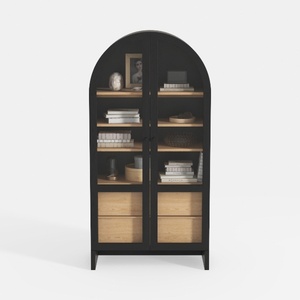
Modern Black Oak Arched Glass Display Cabinet 3D Model
Discover your home’s potential with Homestyler! This user-friendly platform offers an exceptional online design tool, stunning 3D renderings, and a wealth of inspiring design projects and DIY video tutorials. Transform your ideas into reality effortlessly and create the perfect space for you!
Concevez maintenant gratuitement
































