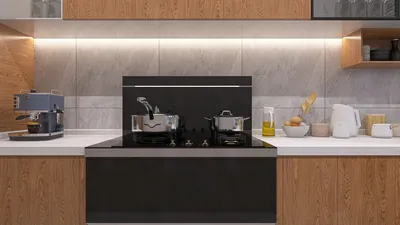


Blue Pearl granite has been a staple in kitchens, consistently drawing admiration. Its shimmering labradorite flecks change with the lighting throughout the day—displaying cool silver in daylight and deep slate at dusk—adding a touch of drama without overpowering the space. Achieving the perfect blend of sophistication and practical use hinges on effective lighting, thoughtful proportions, cabinet colors, and materials that respect the granite’s natural flow. Utilizing tools like Homestyler can enhance this balance further, allowing for precise design layout simulations and visualizations.
At the core of good design is quantifiable comfort. The indirect task lighting over countertops should reach approximately 300–500 lux to eliminate shadows and highlight the granite’s intricate texture, while ambient light can be softer for warmth, aligning with IES recommended practices. From a wellness perspective, kitchens thrive on lighting that minimizes glare and reduces eye strain. The WELL v2 guidelines advocate for visual comfort and a balanced color temperature, aiding concentration when it’s most needed.
When integrating cabinets with a cool-toned stone like Blue Pearl, understanding color psychology is crucial. Cooler shades evoke tranquility and organization, whereas warmer wood tones contribute a sense of coziness—insights supported by extensive studies in color psychology. To counterbalance Blue Pearl’s cool shimmer, I often include one warm, grounded feature—like matte wood, brushed brass, or clay-toned paint—to maintain a welcoming atmosphere without veering into sterility.
Design Vision: The Uniqueness of Blue Pearl Granite
Blue Pearl, predominantly sourced from Norway, is a granite rich in labradorite with dense mica flecks. It boasts remarkable durability, heat resistance, and is scratch-resistant, polishing to a reflective finish that enhances light. The beauty lies in its motion: medium-to-large crystalline structures provide depth without overwhelming veining, making it simpler to match with cabinetry and flooring compared to many high-contrast marble options.
Color Pairings to Enhance, Not Complicate
Here are my preferred cabinet and finish combinations for Blue Pearl:
For backsplashes, I recommend large-format porcelain with a satin finish or hand-glazed tiles featuring slight variations. Using heavily-veined marble alongside such a distinctive granite can introduce too many competing patterns. If desiring metal accents, a brushed stainless steel or a smoked mirror behind the range can reflect the stone’s brilliance without overwhelming the space.
Lighting: Unveiling the Sparkle, Minimizing Glare
Blue Pearl can appear dull under insufficient lighting and excessively sparkly under intense, direct sources. I recommend a three-layer lighting strategy:
To reduce glare, choose a satin or honed backsplash, and opt for fixtures with a high Color Rendering Index (CRI of 90+) to ensure accurate food colors are displayed.
Layout and Workflow: Optimizing Your Space with the Stone
A stunning slab cannot compensate for a poorly planned layout. Maintain an efficient working triangle and ensure seamless landing areas next to major appliances. If exploring layout alternatives, utilizing a quick interior layout planner like Homestyler can help visualize clearances and sightlines prior to finalizing slab dimensions and seam placements.
Blue Pearl excels on islands where natural light can dance across the surface. For slabs with pronounced movement, orient the long axis to lead the eye toward a focal view or doorway. Provide 42–48 inches of perimeter clearance for comfortable flow and bar seating arrangement.
Edges, Seams, and Design Details that Signal Craftsmanship
Edge profiles can completely transform the aesthetic of the kitchen:
Position seams thoughtfully to avoid intersecting the most densely populated crystalline areas. While book-matching isn’t essential for Blue Pearl, maintaining a consistent grain direction is imperative. Request your fabricator to perform dry-fits and photograph seam joints under lighting similar to that in your kitchen.
Finish and Sheen: Polished vs. Honed
Polished Blue Pearl enhances reflectivity and achieves the iconic “gem” effect. In sunlit, glassy environments, honed or leathered finishes can diminish glare and present a more serene atmosphere. Honed finishes darken the apparent color slightly, softening the sparkle; leathered options add tactile enjoyment and disguise fingerprints.
Hardware, Metals, and Complementary Materials
I appreciate a contrast in shine: pairing a matte cabinet paint with brushed hardware alongside polished stone. Metals that complement include:
On flooring, large-format oak or ash in neutral stains offers warmth and clarity. For resilient alternatives, consider low-sheen porcelain in sizes of 24×24 or 24×48 with minimal grout lines to maintain the stone's focus.
Backsplash Playbook
Keep it straightforward along counter runs: elongated subway tiles, Zellige-style hand-glazed tiles, or a monolithic quartz/porcelain in soft gray. For those who desire pattern, apply it vertically—such as a feature wall behind the range—while keeping adjacent runs understated.
Appliance and Sink Pairings
Stainless steel appliances mirror the stone's metallic glints. Panel-ready units can blend seamlessly into wood or painted cabinetry, creating a more cohesive expression. When it comes to sinks, an under-mount in stainless steel or composite granite keeps the counter looking uninterrupted; ensure the reveal detail matches your edge profile for visual harmony.
Ergonomics and Daily Usability
Beyond the stone itself, comfort is paramount. The standard counter height of 36 inches accommodates most tasks; consider a 42-inch bar for standing conversations and quick amenities. For seated islands, aim for 12–15 inches of knee clearance and 24 inches of width per stool. These ergonomic factors prevent overcrowding and promote effortless meal preparation and cleanup.
Maintenance: A Practical Perspective
Blue Pearl is forgiving. Follow sealing recommendations annually—or according to your fabricator's advice—quickly wipe spills, and use cutting boards to maintain the polish. Steer clear of abrasive powders; opt for pH-neutral cleaners. While it can handle heat well, using trivets will safeguard the surface from thermal shock.
Sustainability and Longevity
Granite generally outlasts cabinetry and appliances, aiding in the reduction of replacement cycles. Pair it with FSC-certified woods, low-VOC paints, and LED lighting schemes to lower operational impacts. Choosing durable, timeless combinations is perhaps the most sustainable decision you can make for your kitchen.
Budget and Value
Blue Pearl usually falls within the mid-to-upper pricing tier for granite. Save costs effectively by choosing simpler edge designs, limiting cutouts, and selecting understated backsplashes so the stone can take the spotlight. Invest in areas that matter—like lighting, quality hardware, and a well-designed island.
Sample Palettes I Trust
How to Plan Your Space Before Selecting Stone
Begin by confirming appliance specifications, clearance requirements, and seating arrangements. Use tape to layout island sizes and traffic flow, then evaluate the design with a rapid room layout tool to ensure sightlines, pendant distributions, and daylight interactions align with the slab direction.
FAQ
Consistently strong options include smoked oak, walnut, soft gray, graphite, and ink blue. Remember to balance the cool tones of the stone with at least one warmer element—like wood, brass, or a clay-toned paint.
Polished surfaces maximize sparkle and light reflection, while honed finishes minimize glare and offer a subtler appearance. In bright spaces or open concepts, honed or leathered finishes appear more serene.
Aim for 300–500 lux of task lighting through diffused under-cabinet LEDs, with ambient lighting around 150–250 lux. Select the 2700–3500K temperature range based on your color scheme, and incorporate dimmers to control brightness and shimmer.
It can work if both elements are visually dynamic. Keep most runs subdued—like satin porcelain or simple hand-glazed tile—and reserve striking patterns for a single focal area if desired.
An eased or micro-bevel edge presents a clean, modern aesthetic and is practical for daily use. Mitered thicker edges are suitable for islands, providing a substantial presence.
Incorporate wide-beam ambient fixtures, diffuse under-cabinet lighting, and consider a satin backsplash. High-CRI LEDs reveal colors accurately without harsh light spots.
No, regular sealing, cleaning with pH-neutral products, and the use of trivets and cutting boards is recommended. Blue Pearl is more forgiving than many varieties of marble.
Opt for neutral-stained oak or ash, or large-format low-sheen porcelain. Steer clear of overly warm or yellow woods that can clash with the cool undertones of the stone.
Absolutely. Combine with light cabinetry, a highly reflective backsplash, and multiple layer lighting. If glare is well-managed, polished finishes can effectively bounce light.
Ensure 42–48 inches of clearance on the perimeter, 12–15 inches of knee space, and about 24 inches in width per stool. A layout simulation can confirm proper flow and function.
Brushed brass provides warmth, brushed nickel or stainless steers toward harmony, and blackened steel introduces contrast. Maintain consistency across hardware and lighting for cohesion.
Granite is often more timeless than high-contrast stones. Keep lines elegant and allow the slab to shine, complemented by classic hardware to enhance longevity.
Homestyler is your go-to online home design platform, perfect for anyone looking to transform their space. With its user-friendly design tool, stunning 3D renderings, vast design projects, and helpful video tutorials, you can easily create your dream home without any hassle.
Diseño ahora GRATIS
































