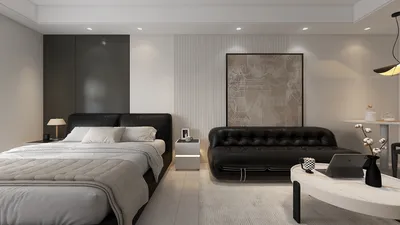


I had a client once who insisted on painting their drawing room in a shade they called “sunset pink,” yet brought in a Persian rug that was a striking burgundy. This taught me early on that color decisions are deeply personal, and it’s essential to visualize them before making any commitments. Utilizing tools like Homestyler can help with this visualization process.
That's why I prioritize visualization tools for color selection: it not only conserves budget and time, but also mitigates the awkwardness of dealing with various paint samples on the wall.
1. Soft Greige for Timeless Calm
I favor greige as it appears warm during the day and neutral under artificial light; it provides a secure and sophisticated base. The benefit lies in its seamless coordination with wooden tones and brass, although it may come off as dull without some texture or contrast.
save pin
2. Deep Teal Accent Wall
Adding a deep teal to a single wall introduces a dramatic yet cozy atmosphere that anchors the sofa and enhances artwork without overwhelming the space. While this bold choice can add personality, lighter carpets and upholstery should be used to avoid a closed-in feeling.
save pin
3. Warm Terracotta for Earthy Comfort
Terracotta exudes Mediterranean warmth and pairs wonderfully with rattan and greenery. I often recommend it to clients desiring a welcoming vibe. In small north-facing spaces, it's crucial to balance with bright white trims or reflective metal accents, and utilizing a tool like Homestyler allows for 3D palette testing to preview the ambiance.
save pin
4. Muted Sage for a Serene Backdrop
Sage green provides a refreshing, modern backdrop that is surprisingly adaptable with various styles of furniture, whether contemporary or vintage. Its forgiving nature helps to mask wear and tear; however, those who find it too chilly can easily warm it up with soft lighting.
save pin
5. Chalky Off-White with Textured Paint
Sometimes the ideal choice is a textured off-white—such as limewash or a matte chalk finish—that adds dimension without creating color chaos. This option offers maximum flexibility in decor; however, stains can be more visible on white finishes, so opting for washable alternatives in high-traffic areas is wise. Creating a mockup from floor to ceiling before deciding on full paint quantities is a practical step.
save pin
Tips 1:
Budget strategy: select a primary neutral shade and invest in a quality accent wall paint or finish; paint can be inexpensive, but good lighting and proper testing are crucial. I recommend testing three hand-painted samples and observing their effects for a week before making a final choice.
save pin
FAQ
Q1: What colors create an impression of a larger drawing room?
A1: Light, warm neutrals like soft greige or warm off-white reflect light well, contributing to a more spacious feeling. Pairing these colors with mirrors and consistent flooring further enhances this effect.
Q2: How do I decide on a paint finish for my drawing room?
A2: Opt for matte or eggshell finishes for the majority of your walls to conceal imperfections, while satin finishes work well for trims and areas subject to frequent contact, facilitating easy cleaning. Reserve high-gloss for architectural highlights.
Q3: Is it possible to blend warm and cool colors in one drawing room?
A3: Certainly—establish a neutral base that leans towards either warm or cool, such as greige, for cohesive harmony among both color palettes. Small decorative items can aid in bridging any remaining temperature disparities.
Q4: How do I choose a color to complement my furniture?
A4: It's effective to place paint swatches beside your largest upholstered pieces at various times throughout the day. If uncertain, opting for a neutral wall color and incorporating furniture shades through textiles and art is a smart approach.
Q5: Are there guidelines for selecting accent walls?
A5: Always choose the wall that naturally captures attention, such as behind the sofa or fireplace, while keeping the surrounding color scheme minimalistic. Accent walls achieve their best effect when their tone enhances rather than competes with the overall palette.
Q6: What’s the best way to test paint colors in my home?
A6: Create large samples on poster board or directly apply to the wall, observing them in various lighting conditions throughout the day. For increased accuracy, you may want to use digital mockups or professional tools like Homestyler to visualize colors in 3D.
Q7: What color trends should I be aware of?
A7: Colors such as earthy terracottas, muted greens like sage, and warm neutrals are currently in vogue for living areas due to their balance of comfort and elegance. According to Pantone (pantone.com), hues inspired by nature continue to shape contemporary interior designs for enduring allure.
Q8: What level of durability should I seek for paint in a heavily used drawing room?
A8: It's advisable to select a mid-sheen (satin) finish for long-lasting durability and easy cleaning in busy homes; consult paint brands for scrub-resistance ratings to ensure the paint will hold up over time.
save pin
Discover your dream home with Homestyler! This user-friendly online design platform offers an intuitive design tool, stunning 3D renderings, and a wealth of inspiring design projects. Plus, with engaging video tutorials, you’ll have everything you need to create your perfect space—effortlessly!
Progetta ora GRATIS
































