

Direct Answer
Bank interior design must seamlessly incorporate security measures, regulatory adherence, and operational risk management while ensuring a welcoming atmosphere for customers. Thoughtfully planned layouts position teller counters, vaults, surveillance systems, and private consultation areas to safeguard assets and maintain trust and accessibility.
Successful bank branches approach security as an integral architectural element rather than an afterthought added onto the design.
Quick Takeaways
Introduction
Security and risk considerations permeate almost every spatial decision in bank interior design. Through numerous financial sector projects, I've observed the most significant error designers make is treating security as a mere technical addition instead of an inherent spatial strategy.
A bank branch functions as a controlled setting where cash handling, confidential financial discussions, regulatory compliance, and customer service must coexist harmoniously. Therefore, pathways, counter placements, surveillance sightlines, and privacy zones should be coordinated from the outset of the design phase.
Skipping these steps often results in common issues such as inefficient teller lines, poor visibility for security personnel, or consultation spaces lacking real acoustic privacy. These problems typically trace back to inadequate layout planning. Early-stage digital tools—like those featured in Homestyler—help designers map secure circulation and staff areas, preventing such issues before construction starts.
This article breaks down fundamental architectural strategies banks employ to manage risk: secure spatial zoning, surveillance integration, compliance adherence, and privacy-oriented consultation rooms.
save pin
Why Security Shapes Bank Interior Architecture
Key Insight: Security in banking environments transcends equipment; it forms the structural basis upon which spatial organization is determined.
Unlike retail shops or offices, bank branches must support layered protective measures. Typically, there are three operational zones guiding interior layout: public areas, controlled service zones, and restricted staff spaces.
Designers must engineer smooth transitions between these zones. The intention is not to conceal security but to direct customer flow naturally while restricting unauthorized entry.
The American Bankers Association highlights spatial visibility as a critical security element. Clear sightlines throughout the lobby enable both personnel and surveillance systems to monitor activities effectively without creating a fortress-like atmosphere.
In many renovation projects I've participated in, enhancing visibility dramatically lowered operational risks by enabling earlier detection of suspicious behaviors.
Designing Secure Yet Welcoming Banking Spaces
Key Insight: The most secure bank interiors often feel least intimidating because security features are subtly melded into the design.
Clients expect comfort and confidence when entering branches. Overly defensive designs—such as heavy barriers, dark interiors, or stark separations—can erode this trust.
Contemporary bank interiors emphasize:
A guiding design philosophy is "visible yet unobtrusive security." Patrons should sense the environment is monitored without feeling surveilled.
Some financial institutions utilize digital simulations, often through platforms like Homestyler, to model customer flows, pinpoint blind spots, congestion, and security weaknesses before physical build-out.
save pin
Placement of Counters, Vaults, and Surveillance
Key Insight: Teller counters, vaults, and surveillance cameras form a vital security triangle within the branch layout.
The relative placement of these components directly affects how well operational risks are controlled.
In most secure layouts:
Frequent design errors include:
Security consultants recommend overlapping surveillance coverage to ensure every critical transaction point is monitored from multiple angles.
save pin
Privacy Zones for Financial Consultations
Key Insight: Dedicated private consultation rooms are essential as financial discussions necessitate both visual and acoustic confidentiality.
Two decades ago, open desk discussions were common. However, today's mortgage talks, investment advice, and verification processes demand protected environments.
Effective privacy rooms incorporate:
A frequent oversight is situating consultation areas too near waiting zones, which can cause clients to feel exposed when entering or leaving sensitive meetings despite soundproofing.
Answer Box
Optimal bank interior security is achieved when spatial zoning, surveillance planning, and privacy areas are integrated early in the layout design. When security is embedded architecturally rather than treated as add-on equipment, branches function more securely and offer a more inviting customer experience.
Regulatory and Compliance Design Requirements
Key Insight: Financial interiors must comply with both security protocols and privacy regulations to protect clients and institutions alike.
Multiple regulatory frameworks influence bank interior design.
Common compliance considerations include:
In the U.S., financial institutions often align designs with guidance from entities like the Federal Financial Institutions Examination Council (FFIEC), focusing on physical security controls and minimizing operational risks.
Design teams increasingly employ visualization software such as Homestyler to generate realistic branch interior simulations pre-construction, enabling thorough evaluation of camera placement, lighting, and visibility.
save pin
Security Design Practices in Barclays Branches
Key Insight: Large banks frequently standardize branch designs to maintain consistent security measures.
Barclays exemplifies integrating security seamlessly into customer-friendly environments.
Design principles they commonly apply include:
A notable trend is prioritizing "soft security"—favoring transparency, staff visibility, technology, and behavioral analytics over heavy physical barriers.
Practically, this results in spaces resembling financial advisory lounges rather than traditional transaction areas.
Final Summary
FAQ
1. Why is security integral to bank interior design?
Bank interiors must safeguard cash, client information, and personnel while preserving a welcoming atmosphere. Thoughtful layouts enhance surveillance and operational safety.
2. What are the primary zones in bank branch layouts?
Most branches feature public zones, controlled service areas, and restricted staff sections, creating layered security.
3. How is client privacy ensured during financial consultations?
Banks use enclosed consultation rooms with acoustic insulation, frosted glass, and controlled visibility to balance privacy and security.
4. Where are teller counters ideally positioned?
Teller counters usually face the entrance to maintain clear sightlines and permit staff to oversee incoming traffic.
5. Do contemporary banks still utilize teller cages?
Many branches now replace cages with open service counters enhanced by surveillance and discreet protective barriers.
6. How does technology contribute to bank interior security?
Technology supports security through cameras, alarms, access control systems, and digital monitoring of customer flow.
7. How does layout planning minimize risk in branches?
Strategically designed circulation routes, visible staff areas, and controlled entry points reduce security risks and errors.
8. What are common pitfalls in bank interior design?
Common issues include incomplete camera coverage, non-soundproof consultation rooms, and poorly positioned teller counters that hinder sightlines.

Minimalist Purple Metal Wood Home Office Desk with Bookshelf 3D Model

Minimalist Black Fluted Base Round Dining Table 3D Model
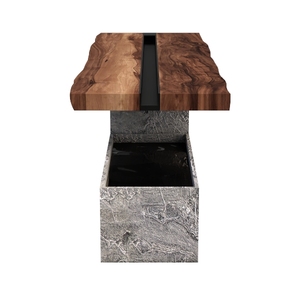
Rustic Live Edge Solid Wood Concrete Console Table 3D Model
Homestyler is an easy-to-use online home design platform offering powerful 3D rendering, a vast collection of design projects, and helpful DIY video tutorials. It’s perfect for bringing your interior decoration ideas to life with creativity and confidence.
تصميم الآن مجانا
































