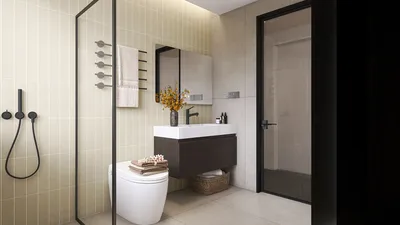


During one late-night installation, I found myself hastily putting up a wall sconce upside down — a misstep my client spotted before I did, leading us both to share a good laugh. This amusing experience highlighted for me that the essence of ambient wall lighting relies heavily on both placement and mood, just as much as it does on the fixtures themselves. Even small walls can inspire grand ideas, and throughout my decade-long journey of designing compact homes and kitchens, I've amassed useful tricks to make tight spaces come alive. In this article, I will present five ambient wall lighting concepts that I've successfully implemented in my projects, detailing their advantages, realistic challenges, and handy tips.
1. Recessed Wall Grazers
Recessed grazers enhance texture beautifully, making them ideal for feature walls adorned with plaster, brick, or fluted panels. I've successfully installed these in a narrow hallway, transforming an otherwise dull corridor into a tactile gallery. The beauty of grazers is their ability to provide subtle drama without causing glare. However, a challenge lies in the installation, as running wiring behind narrow walls can be tricky. For a budget-friendly alternative, consider LED strips with diffusers that can replicate a grazing effect at a reduced cost.
save pin
2. Linear LED Cove on Vertical Planes
Rather than placing lighting solely on the ceiling, position a narrow linear LED at the upper or lower edge of a wall to gently wash the surface with light. I implemented this solution above a sofa in a compact living room, which created an illusion of increased height and introduced a warm ambiance during the evenings. This method is energy-efficient and fantastic for light layering, yet it requires precise installation to ensure an even light wash; if opting for a DIY approach, utilizing a professional template could be beneficial.
save pin
3. Integrated Shelf Lighting
By combining low-profile wall lighting with shelving, you can achieve both display and atmospheric illumination. In a small studio layout, I incorporated puck LEDs beneath floating shelves so that books and plants cast inviting, cozy shadows. This approach simultaneously serves as task lighting and ambient light; however, the drawback is limited accessibility for servicing any recessed LEDs. A solution I found effective is choosing replaceable LED strip modules along with easily accessible channels.
save pin
4. Backlit Artwork or Panels
Utilizing backlighting behind framed art or sleek panels can create a sophisticated halo effect without drawing an overwhelming focal point. For instance, I installed a backlit panel behind a bed's headboard to cultivate a tranquil glow in the bedroom. The outcome is high-quality ambiance with minimal visual clutter; nonetheless, one challenge pertains to ensuring optimal diffusion and proper power routing. To achieve an even light distribution, consider using frosted acrylic and maintaining consistent color temperatures with other fixtures.
save pin
5. Adjustable Wall Sconces with Dimmer
With adjustable sconces, users can effortlessly transition from reading light to soft ambient illumination in mere moments. In one kitchen remodel, I installed articulating sconces adjacent to open shelving so homeowners could direct light to the desired area. These sconces provide versatility and cater to the needs of users; however, their hardware footprint might overwhelm particularly narrow walls — choosing compact arms and wall plates maintains a sense of balance.
save pin
Tips 1:
For effective planning and visualization, I often sketch layouts and then verify proportions using a realistic planner to avoid costly mistakes. Tools that depict light falloff and fixture scale are invaluable, allowing me to finalize placement before cutting any holes.
save pin
FAQ
Q: What color temperature is ideal for ambient wall lighting?
A: Typically, warm white temperatures (2700K–3000K) create the most inviting atmosphere in living spaces, whereas cooler temperatures (3500K–4000K) are suitable for areas requiring task-adjacent ambient lighting. To prevent visual discord, keep temperature settings consistent throughout a room.
Q: Can ambient wall lighting be a substitute for ceiling fixtures?
A: Partially — implemented correctly, layered wall lighting can effectively set the main mood and provide sufficient illumination in smaller spaces. However, combining these with overhead or task lighting often yields the most versatile results.
Q: What’s the best method to conceal wiring for wall lights in an older apartment?
A: Practical and reversible solutions such as surface-mounted raceways or cord covers maintain aesthetics while avoiding invasive work. These options are available in paintable finishes to blend seamlessly with your wall.
Q: Do LED strips offer sufficient brightness for ambient use?
A: Absolutely, modern LED strips come in various lumen outputs; opt for low-CRI, warm strips for a cozy ambiance, and high-CRI varieties for accentuating artwork. Utilizing diffusers helps prevent hotspots.
Q: What’s the optimal way to dim wall-mounted LEDs?
A: Implement dimmable drivers alongside compatible dimmer switches. Always check manufacturer specifications, as not all LED types dim smoothly with every kind of dimmer.
Q: How can I determine the number of fixtures I need?
A: Assess the desired lux for your space, then divide this by the lumen output of your fixtures, accounting for mounting heights and any diffusion losses. For quick planning, consulting a lighting expert or utilizing a robust room planner enhances placement accuracy.
Q: Are there specific safety codes to follow for wall lighting in wet areas?
A: Yes — lighting fixtures situated near bathrooms or kitchens must comply with IP ratings and local electrical codes. It's advisable to consult an electrician when installations are in proximity to water.
Q: How can I visualize wall lighting arrangements before installation?
A: Utilizing advanced visualization tools and industry resources is beneficial; for detailed project previews, I often turn to reliable platforms like Homestyler, which offers an excellent 3D floor planner to simulate light and scale effectively.
Homestyler is your go-to online home design platform! With its easy-to-use design tool, stunning 3D renderings, and a wealth of inspiring design projects and DIY video tutorials, transforming your space has never been more enjoyable and accessible. Start designing your dream home today!
Zaprojektuj teraz za darmo
































