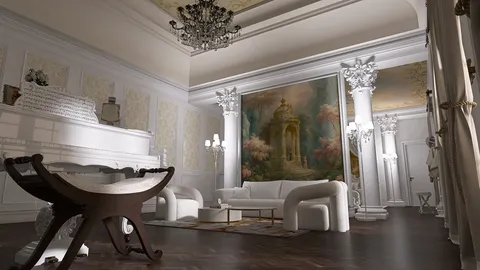
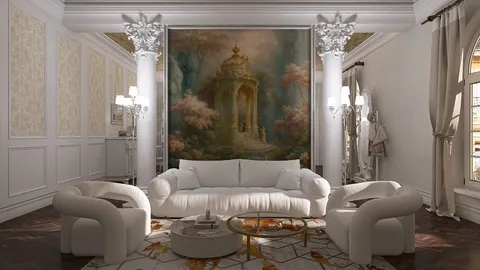
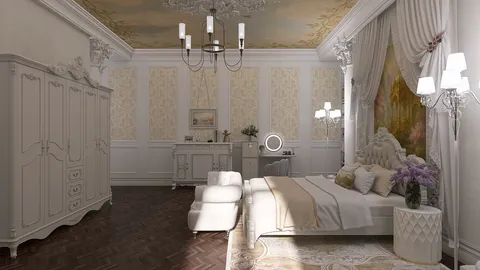
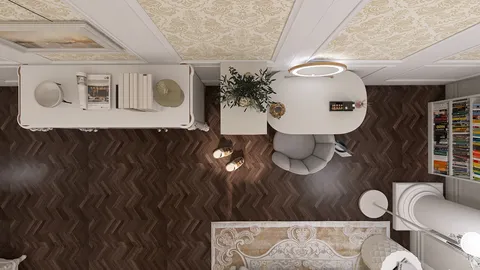
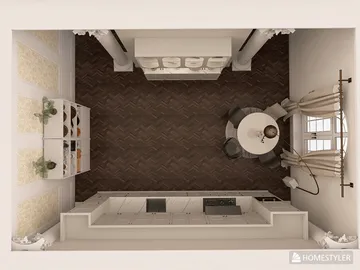
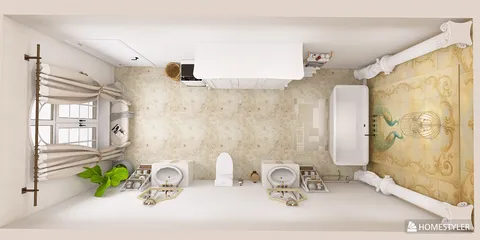
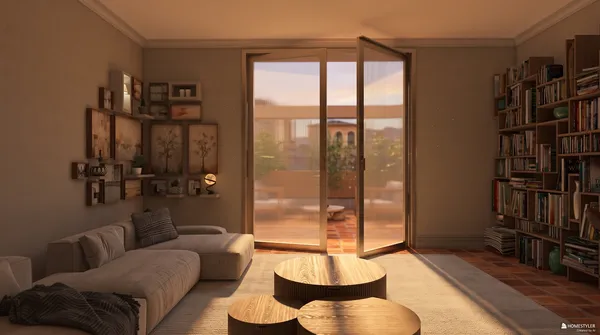
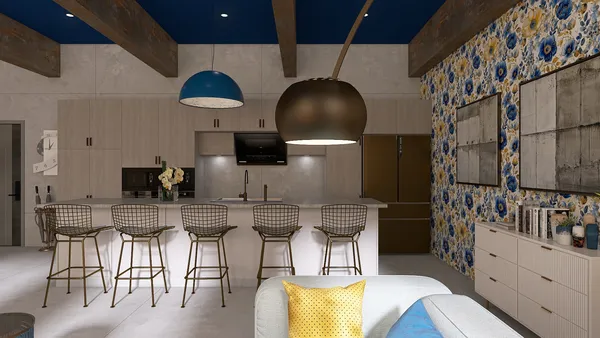
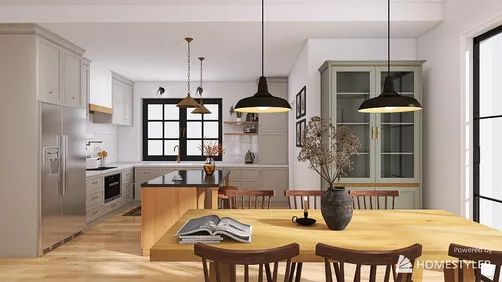
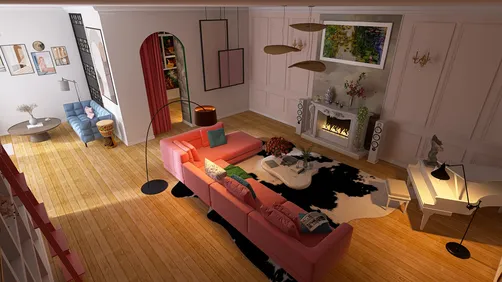
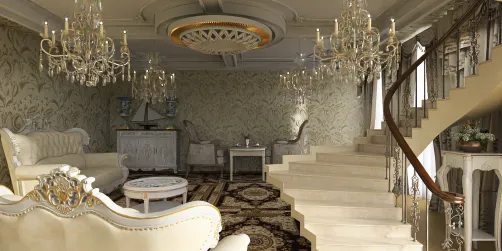
This project explores a fusion of Baroque grandeur and Rococo lightness within a modern open-concept layout. The living room, dining, kitchen, and bedroom are seamlessly connected without doors, ensuring circulation and natural flow, while the bathroom remains the only enclosed space for privacy. The structural framework is Baroque: monumental columns with Corinthian capitals, classical symmetry, and an overall sense of order and permanence. This framework provides gravitas and anchors the open floor plan. Layered upon this structure, the ornamentation reflects Rococo refinement: pastel skies, hand-painted ceiling murals of clouds, vines, and roses, as well as romantic wall compositions of garden pavilions and lush landscapes. These elements lighten the atmosphere, bringing delicacy and charm to the grandeur. The kitchen balances the historical with the functional, employing symmetrical cabinetry and clean lines that echo Baroque order while allowing modern usability. Its neutral palette prevents visual weight, complementing the decorative richness of the adjacent spaces. In the bathroom, a tiled mural with twin peacocks framed by ornate scrolls and pilasters recalls Rococo’s fascination with nature and ornament. The tiled approach ensures practicality in a wet environment, merging artistry with durability. The ceilings are central to the identity of the project. Pastel-toned murals with roses and vines elevate the rooms with lightness, while ornamental frames reinforce Baroque tradition. Each ceiling defines its zone yet integrates seamlessly with the overall scheme. This interior demonstrates how Baroque power and Rococo elegance can coexist, producing a home that is both theatrically expressive and functionally livable.