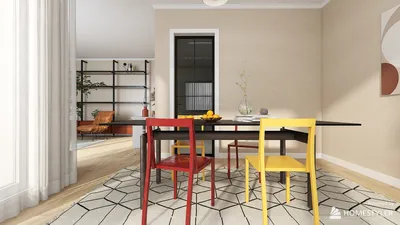


In my experience, I once persuaded a customer that the ceiling paint's white matched the wall paint's white — until streaks and a soggy roller proved me wrong. This taught me an important lesson: paints exhibit different behaviors on walls and ceilings, where even minor errors can feel monumental in compact spaces. I frequently utilize a 3D floor planner to illustrate how various finishes transform a room, as small areas can ignite significant ideas.
In this article, I will present five actionable inspirations that underscore the distinct characteristics of wall paint versus ceiling paint, elaborate on their importance, and share quick solutions I have applied in real projects.
1. The importance of sheen
Ceiling paint typically has a flatter finish than wall paint, designed to conceal imperfections—flat finishes absorb light and minimize glare, which is particularly beneficial when dealing with textured ceilings. For walls, I generally suggest eggshell or satin finishes: they are easier to clean and enhance the color depth but may expose bumps more readily.
During a recent apartment facelift, transitioning to a low-sheen wall paint made it easier to wipe off scuffs, yet we needed to invest additional time preparing the plaster to ensure the sheen didn’t highlight the surface's waves.
save pin
2. The behavior of color choices when elevated
White paint on a ceiling appears cooler and lighter than identical white applied to a wall due to the way light interacts with it. Opting for a slightly warmer ceiling white can create a more inviting atmosphere without altering the wall color scheme. In contrast, a deep wall hue with a bright ceiling can visually raise the ceiling.
However, the trade-off is notable: while the contrast can be striking, any touch-ups become very evident, so it’s wise to prepare for accessible ladders or a repaint budget if you’re fond of bold ceilings.
save pin
3. Reflectance and the perception of height
Ceiling paints often feature higher light reflectance to bounce light around, making spaces feel taller; on the other hand, walls with lower reflectance absorb light and provide depth. To visually elevate a low ceiling, consider using a slightly more reflective finish on the ceiling compared to the walls.
My go-to strategy in studio apartments is to employ a soft off-white ceiling paired with a warm mid-tone wall—this combination brightens the area while maintaining an intimate feel. If you're intrigued about how this looks in both plan and elevation, take a look at these practical kitchen layout planner examples showcasing how lighting and finish selections influence compact spaces.
save pin
4. Functionality: washability, moisture resistance, and VOCs
Walls in areas with high foot traffic require washable paint formulations; kitchens and bathrooms benefit significantly from mold-resistant or semi-gloss finishes. Ceilings, however, generally endure less wear, so flat or matte finishes are common, although bathrooms might necessitate a higher-sheen ceiling paint to withstand moisture.
An important consideration: higher-sheen paints can be less forgiving to apply and may reveal imperfections more vividly, making proper preparation essential—along with selecting low-VOC options for enhanced indoor air quality.
save pin
5. Accent ceilings and layered finishes
An accent ceiling painted a few shades darker than the surrounding walls can create an inviting cocoon in a bedroom or delineate a dining area in a studio. Utilizing metallic or satin finishes on a small recessed ceiling adds character without overwhelming the overall space.
From a budget perspective, accent ceilings can be economical if you’re only dealing with one surface; however, expect some additional effort with taping and cutting in, so consider hiring a professional if your ceiling includes intricate moldings. Before making a final decision, I also like to test samples in the late afternoon to observe any color variations.
save pin
Tip 1:
Quick advice: always test both wall and ceiling paints together on a 2x2ft board placed against the wall and propped near the ceiling. It's an affordable and quick method that helps prevent unforeseen surprises.
save pin
FAQ
Q1: Can wall paint be used on the ceiling?
Yes, it’s possible, but it’s not the best choice—wall paint typically has a higher sheen, which can highlight imperfections or lead to more drips. If you choose to do so, select a flatter sheen and apply thin coats.
Q2: Is ceiling paint different from flat wall paint?
In most cases, yes—ceiling-specific paints are often thicker and specially formulated to minimize splatter and enhance coverage on horizontal areas. They are designed to effectively disguise texture.
Q3: What sheen is advisable for walls in busy areas?
Eggshell or satin is usually the best option as they provide a balance between aesthetics and cleanability. Higher-sheen finishes are simpler to wipe clean but often highlight surface flaws.
Q4: How should I select a ceiling white that complements wall colors?
Choose a ceiling white with a slight undertone that complements the wall color—warm walls pair well with a neutral-warm ceiling, while cool walls suit a crisp or cool ceiling. Testing samples at various times of the day is advisable.
Q5: Are low-VOC paints worth considering?
Absolutely—low-VOC paints significantly reduce harmful off-gassing and enhance indoor air quality, which is particularly important in smaller environments and for sensitive residents. The U.S. EPA recommends minimizing VOC exposure indoors: https://www.epa.gov/indoor-air-quality-iaq.
Q6: Do ceilings require primer?
If you're covering stains, smoke, or considerable color transitions, it is advisable to prime the ceiling beforehand. A good primer enhances adhesion and decreases the number of coats needed.
Q7: Do darker ceilings create a sense of reduced space?
Yes, darker ceilings can diminish the perceived height of a room but can foster a cozy and intimate atmosphere. Use this effect strategically in bedrooms or dining areas.
Q8: How frequently should I repaint ceilings compared to walls?
Typically, ceilings require repainting less often than walls, unless subjected to moisture or staining—expect to paint ceilings every 7 to 15 years and walls every 3 to 7 years based on wear and tear.
save pin
Homestyler is your go-to online home design platform, offering an intuitive design tool and stunning 3D renderings. With a wealth of design projects and helpful DIY video tutorials, you can easily transform your space, regardless of your experience level. Start creating your dream home today!
Design Now for FREE
































