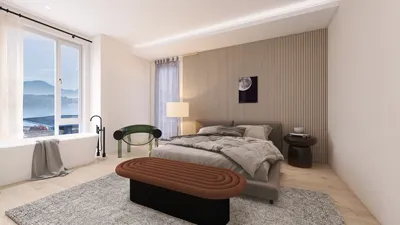


The lifestyle of the future integrates work, caregiving, and relaxation into a seamless flow, contrasting with today’s homes that compartmentalize these essential activities. This discrepancy motivates my detailed examination of every four-bedroom duplex floor plan blueprint, much like studying a complex code. Recent data from the NAHB indicates a continuous rise in multi-generational and flexible living spaces, which resonates with my clients' desires: spaces must function more effectively with a cleaner design rationale. The future is encroaching, and I can foresee its implications through a spatial reasoning approach—where square footage translates into functional bandwidth, and how a duplex harmoniously accommodates two households while minimizing noise.
Courtyard Spine + Split Levels
Design Logic: A central shared courtyard serves as the heart of the duplex, dividing private areas by level and usage. For multi-generational living, this design requires zones that can both come together and segregate as needed.
Flow: From entry → courtyard node → living area → kitchen → a half flight up to the bedrooms; this organized loop keeps foot traffic light and daily routines clear.
Sightlines: Long views stretch from the entry to the green core, maintaining layered privacy: a public front area, a more intimate mid area, and a quiet background, ensuring clarity in daily interactions.
Storage: Integrated storage solutions along circulation paths function like cache lines; pantries and under-stair trunks manage seasonal excess while keeping essential spaces uncluttered.
Furniture Fit: Sofas designed with 90–100" frames and tables of 72–84" ensure a perfect match for corridor widths; bedroom walls are framed for queen or king beds, allowing for good bedside access without obstruction.
Verdict: This design framework maintains coherence between two homes; in five years, the courtyard will evolve into a diplomatic space for managing light, sound, and social engagement.
save pin
Mirror-Duplex with Asymmetric Flex
Design Logic: The mirrored halves create structural stability and cost efficiency, with one flexible room designed for work and the other oriented towards a caregiver’s suite—demonstrating future resilience through asymmetry.
Flow: From the front entry → shared vestibule → branching into mirrored living areas → flex space → clustered bedrooms; this layout prevents scheduling conflicts.
Sightlines: Symmetry ensures predictable sight lines; the flexible space acts as a visual buffer, minimizing direct views into sleeping areas to enhance privacy.
Storage: Twin linen towers, vertical garage racks, and mudroom lockers provide tiered storage for quick access to everyday items as well as longer-term archives.
Furniture Fit: Modular sectionals with adequate circulation margins of 36"; desks positioned at 60" allow for acoustic panels to prevent work materials from encroaching on family space.
Verdict: The mirrored structure reduces friction; the asymmetry of the flex space allows each household to manage their version of life effectively without radically altering the overall plan.
save pin
Side-by-Side Duplex with Shared Utility Spine
Design Logic: Central utilities run along a spine, liberating outer walls for natural light and outdoor areas; sustainability and ease of maintenance become integral to the lifestyle interface.
Flow: From the street → porch → living area → kitchen linked to the utility core → surrounding bedroom areas; daily activities and maintenance operate concurrently without conflict.
Sightlines: Windows create a dynamic left-right panorama; kitchens maintain visibility into play areas while bedrooms are designed with segmented views for enhanced privacy.
Storage: Tall pantry storage, wall-mounted laundry bins, and terrace storage chests; the capacity is tailored to accommodate weekly and annual needs.
Furniture Fit: Dining spaces designed to host eight with a 42" clear space around them; children's rooms have pathways set to 30" to prevent bottlenecks from kids and their gear.
Verdict: A service spine ensures the future adaptability of upgrades—like HVAC, electric vehicle charging, and graywater systems—allowing the design to evolve without major renovations.
save pin
Final Takeaway
A blueprint for a four-bedroom duplex is not just about constructing walls; it serves as a framework for two households sharing their time, light, and responsibilities. Its variations—multi-generational layouts, combined townhome designs, and flexible planning—illustrate how homes will function similarly to software, continuously updating in response to needs. Emphasizing long-term planning for concepts like ‘duplex with a flex office’ and ‘multi-generational suite planning’ demonstrates that the design interface is more crucial than size. From my perspective, the most intelligent homes of tomorrow will not necessarily be larger, but will be designed with greater intention, particularly when utilizing tools like Homestyler for optimal layouts.

Boucle Fabric Solid Wood Base Modern Sofa 3D Model

Minimalist Fluted Solid Wood 6 Drawer Dresser 3D Model

Minimalist Solid Wood Linen Armchair with Throw Pillow 3D Model
Looking to transform your living space? Homestyler is your go-to online home design platform! With an easy-to-use design tool, stunning 3D renderings, and a treasure trove of DIY video tutorials, you'll be inspired to create your dream home effortlessly. Dive in and start designing today!
Progetta ora GRATIS
































