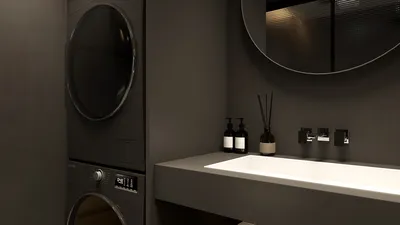


I often reminisce about a time when a client wanted me to fit a full-sized washer, dryer, pantry, and a cat condo into a mere 3-foot closet, all while expecting it to resemble a luxurious boutique hotel. This amusing scenario imparted a crucial lesson: smaller spaces necessitate smarter design choices. For anyone looking to create a cozy laundry corner, starting with a straightforward mini-laundry layout can help you stay ahead of potential surprises.
1. Utilize vertical space: stack appliances and install pull-out shelves
In mobile homes, I particularly enjoy stacking washers and dryers, as this opens up additional floor space for folding laundry or storage solutions. By incorporating pull-out shelves next to the stacked units, you can conveniently store detergents without compromising any floor area.
Benefits include significant space savings and a clean visual appeal. However, a few challenges such as ventilation and vibration might arise—my advice is to use anti-vibration pads and check the length of the vent before making any purchases. A valuable budget tip is to seek out secondhand stacked appliances, which can be dependable if you verify their seals and hoses.
save pin
2. Install fold-down surfaces that hide away when not in use
I once added a wall-mounted fold-down counter in a 7-foot corridor, and the homeowners claimed it transformed their space. This counter serves as a folding station, ironing surface, or sorting area for socks, and it discreetly tucks away when it’s time to dine.
Pros include affordability and practicality, while a downside is the weight limit—ensure you select sturdy brackets and steer clear of excessively heavy appliances on the surface. I favor laminate tops as they are easy to clean in damp settings.
save pin
3. Focus on vertical storage instead of horizontal clutter
By using hooks, pegboards, and slender cabinets, you can turn awkward vertical spaces into neatly organized storage areas. I once implemented a tall, narrow cabinet with concealed sections to keep laundry baskets and cleaning supplies stored neatly in a mobile hallway.
Though starting out using vertical storage might seem cramped, it tends to be forgiving if you plan the height of access correctly and keep frequently used items within easy reach. To better visualize limited spaces and ensure proper planning, create a mockup—it provides clarity for tight areas.
save pin
4. Decide between combo units and standalone machines
I frequently assess the pros and cons of washer-dryer combos versus separate machines. Combination units save space and require less plumbing work, but they can take longer to wash and handle smaller loads. On the other hand, separate machines are typically faster and easier to service, although they need additional height and utility space.
As a general guideline: for one- to two-person mobile homes, a high-quality combo is usually the best choice. For larger families or days filled with laundry loads, stackable separable machines are advisable if your ceiling and plumbing permit. Additionally, consider installing soundproofing panels if the washer and dryer are near living areas.
save pin
5. Address venting, waterproofing, and multi-functional designs
Venting can be quite challenging in mobile homes. I’ve rerouted vents through closets and opted for condenser dryers where external venting isn’t an option. Waterproof flooring and easy-to-access shut-off valves are essential—after experiencing a minor flood, you learn quickly.
If you’re looking to visualize various arrangements before making purchases, modern design tools like Homestyler can quickly generate layout options. I’ve effectively utilized these AI-driven visualization tools to explore multiple plans in short periods, which greatly reduced headaches when finalizing placements.
save pin
FAQ
Q1: What is the best washer type for use in a mobile home?
A: In compact mobile homes, a washer-dryer combo serves as a space-efficient solution that requires less installation effort. If you handle a considerable amount of laundry, however, stacked separate units offer better performance but necessitate more venting and height clearance.
Q2: Is it possible to vent a dryer in a mobile home?
A: Yes, but correct routing of the vent is crucial. If external venting is not an option, consider using a condenser dryer or installing a heat-pump model that is designed for recirculation.
Q3: How can I prevent water damage beneath the washing machine?
A: Ensure you place a drain pan below the machine and an easily accessible shut-off valve. Implementing waterproof flooring or elevated platforms can also offer additional protection and peace of mind.
Q4: Are stackable machines noisy in smaller homes?
A: Noise can indeed be an issue; using anti-vibration pads, ensuring proper leveling, and adding a thin acoustic panel behind the unit can greatly help mitigate this. Proper installation is key to minimizing noise complaints.
Q5: How much clearance is required around appliances?
A: Typically, it's best to allocate at least 1 to 2 inches on the sides and a few inches at the back to allow for hoses and airflow. Be sure to provide adequate front clearance for doors and maintenance, based on the manufacturer's specifications.
Q6: What budget-friendly upgrades can have a big effect?
A: Consider adding pull-out shelves, a fold-down counter, and straightforward vertical hooks. These inexpensive modifications significantly enhance workflow and minimize clutter.
Q7: Where can I find energy-efficient washers ideal for compact homes?
A: Seek out ENERGY STAR certified products; they consume less water and energy while still delivering reliable performance. For recommendations, consult the specifications and guidelines available at ENERGY STAR (https://www.energystar.gov).
Q8: How do I determine the right layout prior to purchasing?
A: Carefully measure your space, create a footprint mockup using tape on the floor, and consider utilizing digital layout tools to test clearances. If you want to quickly visualize various scenarios, explore an online 3D layout demo before making a decision.
save pin
Homestyler is your go-to online home design platform! With its user-friendly design tool, stunning 3D renderings, and a wealth of DIY video tutorials, you can effortlessly create beautiful spaces. Whether you're a novice or an experienced designer, Homestyler makes home design accessible and fun!
Design Now for FREE
































