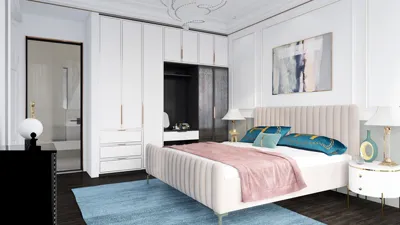


The demands of future living necessitate precise measurements, yet currently, many homes experience issues with imprecise data and differing expectations. This discrepancy is particularly evident in the calculation of square footage. According to national statistics from Zillow, inaccuracies in assessing usable areas are a common worry for buyers, impacting their confidence in pricing. I liken deriving the total square footage from a floor plan to interpreting a lifestyle framework—it's a glimpse into the approaching future, and I consider how we quantify space akin to how we measure time with tools like Homestyler that enhance spatial reasoning.
Open-Loop Rectangle Method
Design Logic: When a plan adheres to an orthogonal layout, I breakdown the space into rectangular units; modern households increasingly value measurable metrics over mythical room dimensions.
Flow: I assess the area by moving clockwise from the entrance, measuring width and depth for each rectangle, before summing them up; corridors are treated as lightweight components, and patios are only included if they are fully enclosed.
Sightlines: The primary lines—entrance to window—determine the user interface layers; I allow visual continuities to dictate which rectangles contribute to the conditioned space versus visual overflow.
Storage: Closets function like storage caches: they are counted if they fall within the thermal boundary; mechanical chases are considered memory overhead, as they do not offer accessible square footage for users.
Furniture Fit: The clearances for beds, sofas, and tables authenticate the calculated modules; if pathways intersect, the overlap should be deducted from the total, as indicated by the API.
Verdict: This method provides a future-ready figure for 90% of orthogonal homes, allowing both buyers and appraisers to communicate without misinterpretation.
save pin
Polygon Decomposition for Irregular Plans
Design Logic: Angles and curves represent the essence of flexible living; I break them down into triangles and trapezoids, maintaining fidelity to the intended design.
Flow: I start at a defined vertex, marking points, calculating areas by using base times height or the shoelace method, and summing these areas while excluding voids, such as double-height areas.
Sightlines: Curved walls enhance perception; I designate sight corridors like multi-layered menus—only enclosed, conditioned geometric shapes contribute to the total area.
Storage: Built-in features along curves count if they are floor-bound; overhead lofts serve as secondary storage unless they can support regular use.
Furniture Fit: The design of curved sofas and radial dining spaces defines chord lengths; these measurements confirm whether a polygon is genuinely usable without impeding flow.
Verdict: The outcome respects the design intention and equips users for five years of adaptable configurations without miscounting space as area.
save pin
Usable vs. Gross: Envelope-Aware Tally
Design Logic: Future valuation frameworks will distinguish gross from usable spaces; I mark conditioned interiors and generally exclude garages, porches, and unheated basements unless they have been converted for use.
Flow: I first compile gross area as a master function, then refine the total based on envelope factors—insulation, HVAC, and ceiling height—to calculate the net livable square footage.
Sightlines: Thresholds serve as user interface dividers; doors, sliders, and thermal breaks inform me which segments of space represent everyday living versus background areas.
Storage: Attics and under-stair spaces count only when they are accessible, floored, and climate-controlled; if not, they should be viewed as external reserves.
Furniture Fit: Adequate headroom (≥7 ft) and egress become essential constraints; any area lower than this should not contribute to the total square footage as it limits usability.
Verdict: This envelope-aware approach aligns seamlessly with appraisal practices and reflects how families utilize their spaces, thwarting inflated metrics that might lead to poor decisions.
save pin
Final Takeaway
Estimating total square footage from floor plans transcends mere mathematics; it governs the scope of future living preferences. By differentiating between gross and usable space and incorporating fundamental principles like flow, sightlines, and envelope parameters, we achieve an authentic value. Long-term requirements, such as net conditioned area and livable square footage, become the true framework for informed decisions. In my perspective, the most intelligent homes of the future will not necessarily be larger—they will simply be more purposeful, particularly when utilizing tools like Homestyler.

Minimalist Solid Wood Console Table With Drawers 3D Model
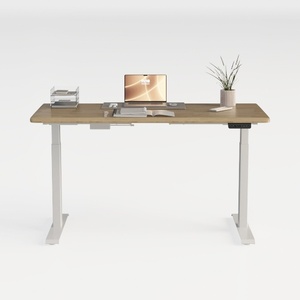
Adjustable Stand Up Desk with Memory Preset
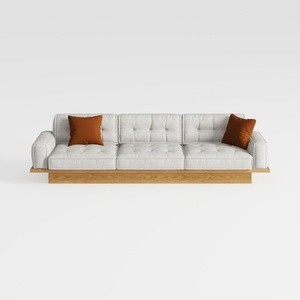
Modern Solid Wood Frame Tufted Fabric Three Seat Sofa 3D Model
Homestyler is the ultimate online home design platform for transforming your space. With its user-friendly design tool, stunning 3D renderings, extensive design projects, and helpful video tutorials, you can effortlessly turn your decor dreams into reality. Start designing today!
立即免费设计
































