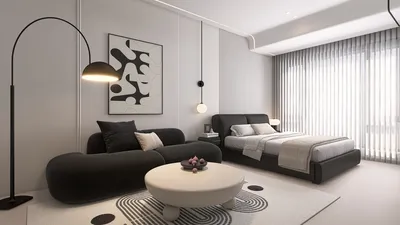


As we move ahead, the challenges of reduced living space are becoming more apparent; the conflict lies in the excess of belongings versus the need for tranquility. Recent housing statistics from AIA indicate a trend towards smaller living quarters while also showing a rising demand for flexible designs. This is where the 300 sq ft apartment layout emerges as a solution, embodying new lifestyle adjustments. I view these spaces as interfaces that guide us, rather than mere containers for our possessions; an early example of future living where keeping focus is paramount. Utilizing a spatial reasoning toolkit can facilitate this shift.
Hybrid Spine Studio
Design Concept: A central millwork spine separates sleeping areas from social spaces, merging them into a unified framework suitable for urban living in 2030.
Flow: The sequence flows from entry to utility bay, through the galley kitchen, connecting to the spine, leading to the lounge window bay, and finally to the sleep nook; this structured path minimizes confusion.
Sightlines: From the entrance to the glass, the spine mitigates glare while enhancing spatial depth; the layering of transparency prioritizes natural light as the core user interface.
Storage Solutions: The spine functions as a storage unit, with modules ranging from 18 to 22 inches in depth, featuring vertical drawers and toe-kick storage—keeping essential items easy to access and less-used items higher up.
Furniture Arrangement: Paths of 30 inches, 24-inch counters, a 60-inch sofa, and a full-sized 54-inch bed fit snugly into a 70-inch niche—design elements that align with human ergonomics and the needs of micro-living.
Conclusion: This layout is stable and efficient, transitioning smoothly from solitary weekdays to shared weekends without complications.
Save pin
Diagonal Daylight Loop
Design Concept: A corner-to-corner diagonal design enhances the perception of space; future residences will favor sightline efficiency over sheer square footage.
Flow: Entry leads to a corner prep area, followed by an angled dining surface, transitioning into a flexible work lounge and concluding at the sleeping area—this design avoids dead ends.
Sightlines: The diagonal layout opens the plan to longer views of glass; the hierarchy of the user interface features windows, plants, work areas, and storage in that order.
Storage: Under-platform drawers at 24 inches deep, ceiling-mounted bins by the entrance, and wall niches at 12 inches create a multi-tiered storage system that efficiently categorizes items.
Furniture Fit: A drop-leaf table expands from 24 to 40 inches, accompanied by two stackable chairs, and a 72-inch platform that accommodates a queen-sized futon; items are easily interchangeable based on need.
Conclusion: This diagonal structure allows rooms to ‘breathe’; looking ahead five years, it retains a spacious feel due to the seamless flow of information.
Save pin
Wall-Bed Command Strip
Design Concept: A command strip wall integrates sleep, work, and media functions into one cohesive unit; ideal for remote work lifestyles.
Flow: The threshold includes a coat storage area, leading into a streamlined kitchen, then to the command strip, connecting to a balcony or Juliet-style edge—creating a direct route for everyday activities.
Sightlines: The closed bed aspect alleviates visual clutter, while the arrangement of screens, artwork, and windows offers a tranquil visual experience.
Storage Solutions: Shallow tall units at 14 inches for quick access, deep storage bays at 24 inches, and pegboard micro-storage for tools create an organized environment.
Furniture Fit: A 60-inch wall bed, 48-inch fold-down desk, and 66-inch sofa area are designed to accommodate passage without hindrance from future devices.
Conclusion: This layout acts as a refined operating system for micro-living; it becomes adaptable for rest when needed, allowing the daytime to utilize full capacity.
Save pin
Final Takeaway
A 300 sq ft apartment floor plan should not be viewed as a limitation; rather, it serves as a meticulous interface for managing focus, light, and movement. Through innovative strategies in micro apartment layouts and versatile furniture systems, each square foot transforms into a valuable resource. The future of small home design and studio layouts lies in efficiency, not extravagance. From my perspective, the most intelligent homes won’t necessarily be larger—they will simply be more thoughtfully designed, and tools like Homestyler will play a crucial role in realizing this vision.


Solid Wood Glass Front Display Cabinet Minimalist Storage 3D Model

Modern Minimalist Solid Wood Metal Dining Table 3D Model

Minimalist Solid Oak Wood Coffee Table with Black Base 3D Model
Looking to transform your living space? Homestyler is your go-to online design platform! With its user-friendly design tool, impressive 3D renderings, and a wealth of DIY video tutorials, you can effortlessly create stunning interiors and bring your vision to life.
立即免费设计
































