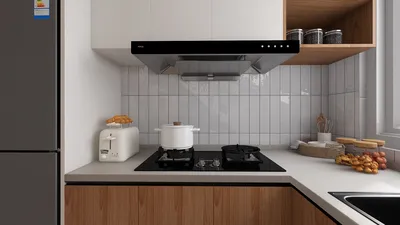


I once faced the challenge of designing a galley kitchen for a client who insisted on fitting a dining table into a corridor merely 6 feet wide. It was a frustrating moment, but I discovered a valuable technique that transformed the entire space. This solution has since become my go-to strategy for designing tight kitchens: initiate the process with a clear and intelligent plan that prioritizes workflow. For quick visualizations, I frequently create a smart, space-saving layout ahead of selecting finishes. Incorporating tools like Homestyler can be especially helpful for this stage.
1. Optimize vertical storage with high cabinets and open shelves
I appreciate tall cabinets as they help reclaim wasted vertical space, giving a purposeful feel to a galley kitchen. Open shelves add variety and allow easy access to everyday items, but they do require some aesthetic consideration — not every client enjoys arranging their dishware, so it's wise to include styling time in the budget.
save pin
2. Implement continuous countertops and establish task zones
A seamless countertop not only visually elongates the galley but also promotes a practical flow from prep to cooking. It's beneficial to delineate specific areas for preparation, cooking, and cleaning, allowing multiple people to work simultaneously without bumping into each other; this is a small luxury that can make a significant difference. When I create these zones, I often utilize real-time 3D planning tools to catch any clearance issues early, making designs more efficient and effective with Homestyler.
save pin
3. Select compact appliances and innovative hardware
Narrow refrigerators, slim dishwashers, and column ovens are lifesavers in a galley kitchen. They keep the space clear while sometimes coming with a higher price tag than standard models — I always make sure to clarify this during budgeting discussions. Additionally, don’t overlook the importance of features like soft-close drawers and pull-out pantry racks: these small enhancements contribute to a high-end feel.
save pin
4. Utilize reflective finishes and maintain continuous sightlines
Light palettes, shiny backsplashes, and a window at the end of the galley can create an illusion of openness. Incorporating mirrors or reflective tiles can amplify this effect, though they can highlight splashes, so it's best to choose durable, easy-to-clean materials if you're a frequent cook.
save pin
5. Develop versatile areas with pull-out features and foldable surfaces
Elements such as pull-out cutting boards, collapsible tables, and foldable counters elevate the usability of a galley beyond just meal preparation. Once, I transformed a laundry-adjacent kitchen into a multifunctional space using a pull-down breakfast shelf — a small innovation that created a big impact. For clients needing high-quality visuals before making decisions, I create photo-realistic 3D renders using Homestyler, enabling them to visualize how finishes and lighting interact.
save pin
FAQ
Q: What is the ideal width for a galley kitchen?
A: Ideally, the aisle should measure between 42 to 48 inches for one cook, and 48 to 60 inches for two cooks. Reducing this space requires prioritizing circulation and storage effectively.
Q: Can a galley kitchen negatively impact resale value?
A: Not necessarily, provided it is well-designed. A functional galley with contemporary finishes and ample storage can be very appealing, especially in urban settings where space is at a premium.
Q: What flooring is best for a galley kitchen?
A: It’s wise to choose durable, water-resistant flooring like porcelain tile or high-quality vinyl plank; lighter hues can help maintain an open feel in the corridor.
Q: How can I make a galley kitchen seem larger?
A: Employ light colors, consistent countertops, reflective backsplashes, and minimize visual clutter. Maintaining the same flooring across adjacent rooms can also extend sightlines.
Q: Is it possible to fit a dishwasher in a narrow galley?
A: Yes—compact or slimline dishwashers and drawer units are tailored for tight spaces; ensure cabinet widths are planned early to accommodate these choices.
Q: Should I consider opening a galley to a living area?
A: Opening it up can enhance light and movement but may reduce wall storage. I assess this trade-off with clients based on their cooking habits and storage requirements.
Q: Are there building code considerations I should be aware of?
A: Yes—clearance around ovens, ventilation standards, and electrical loads must comply with local codes; it's essential to consult a licensed contractor early in the planning phase. For reliable industry standards, check the NKBA guidelines at https://www.nkba.org.
Q: What should I budget for a galley kitchen remodel?
A: Costs vary based on market and choices, but a modest galley remodel typically begins with a basic budget for cabinets, countertops, and appliances, escalating with custom cabinetry or upscale finishes. It's advisable to gather several quotes and include a 10-15% contingency in your budget.
save pin
Homestyler is your go-to online home design platform! With its user-friendly design tool, stunning 3D renderings, and a wealth of inspiring design projects and DIY video tutorials, you can effortlessly create and visualize your dream space. Transform your home today with Homestyler!
Desain sekarang Gratis
































