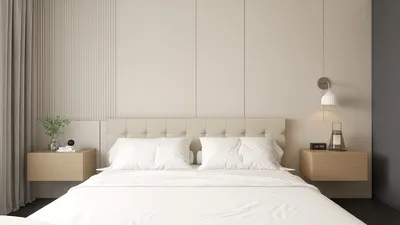


The future is increasingly oriented towards multi-generational living, with the current challenges of affordability and privacy in densely populated areas. The solution lies in innovative designs like stacked homes. Data from AIA and NAHB indicates a rising demand for flexible living arrangements akin to ADUs, prompting a shift in spatial reasoning that transforms two flat floor plans into modular lifestyles. I conceptualize these as streamlined software: a single structure with dual functionalities, sharing essential services while maintaining individual autonomy.
Upper Flat: A Social Front, a Quiet Back
Design Concept: The front bay serves as an active living and dining space that connects to street life, while the bedrooms at the back provide necessary acoustic insulation, preparing the space for future hybrid working environments.
Flow: From entryway to a coat niche, through an open lounge to a dining area, leading to a galley kitchen and bedrooms, and finishing with a bathroom; this clear sequence minimizes noise interference.
Sightlines: Visual connections from the sofa to a street tree, and from dining areas to the kitchen; diagonal layouts maintain a user interface hierarchy, balancing public and private areas effectively.
Storage Solutions: A full-height pantry serves as a storage cache, with a linen tower positioned near the bathroom and wardrobe spaces designed into the bedroom walls; efficient retrieval enhances daily living.
Furniture Specifications: Accommodating an 84-90" sofa, with a dining depth of 30" and clearances of 36" in the kitchen; the design is API-safe, featuring a remote work corner nestled in a 60" niche.
Conclusion: In five years, this layout will present a serene operational layer, facilitating meetings at the front and restful sleeping at the back, effectively minimizing latency.
save pin
Garden Flat: A Courtyard Center, Surrounding Rooms
Design Concept: A central courtyard or lightwell acts as a crucial processing center; the perimeter rooms function as connected modules, ideal for aging in place or providing rental flexibility.
Flow: Starting with a shared vestibule leading to individual unit doors, the design flows into a kitchen facing the courtyard and branches off to bedrooms and a bathroom, effectively reducing dead-end areas.
Sightlines: The eye travels from the entrance to a green courtyard, with semi-opaque partitions providing tiered privacy without rigid barriers.
Storage Solutions: Under-stair bins, bench drawers near the courtyard, and wall-mounted utility racks ensure that storage is conveniently located, minimizing the time spent fetching items.
Furniture Specifications: A round 42" table avoids crowding, while 24" deep countertops fit snugly in narrow areas, and beds are flanked by 48" widths for ease of access.
Conclusion: This adaptable layer can transform from a peaceful rental to a caregiver suite without requiring extensive redesign, showcasing efficiency in its layout.
save pin
Shared Spine: Aligned Services, Preserved Autonomy
Design Concept: By utilizing stacked wet walls and electrical risers, costs and carbon footprints are significantly reduced; the design’s autonomy relies on doors, soundproofing, and strategic lighting.
Flow: Access through an exterior stoop leads to split staircases and separate entrances, while the service spine parallels the main path, allowing rooms to connect seamlessly, like clients in a network.
Sightlines: Glazed walls create a visual corridor from front to back, with transoms allowing light in without the intrusion of noise, ensuring clarity in user interfaces without any leaks.
Storage Solutions: A communal area for bikes and equipment on the ground floor serves as a shared cache, with individual lockers designated for each unit to maintain order as a matter of protocol.
Furniture Specifications: Consoles at the entry are designed with a depth of 12", 48" landing areas for stairs, and stackable laundry facilities fit snugly in 27" spaces; compact yet future-proof.
Conclusion: In five years, aligning these systems will decrease maintenance needs while residents continue to enjoy their unique rhythms without interference.
Final Insight: Two flat floor plans are more than just stacked homes; they represent dual environments crafted for affordability, privacy, and future adaptability. Variations such as stacked duplex designs and multi-family units enable households to expand without excessive sprawl. I envision them as operating systems, where light, sound, and services flow efficiently, similar to well-written code. My belief is that the most intelligent homes of tomorrow won't necessarily be larger, but will instead be defined by intentional design—enter Homestyler to make this vision a reality.
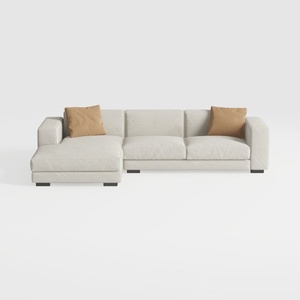
Minimalist Fabric L Shape Sectional Sofa with Throw Pillows 3D Model
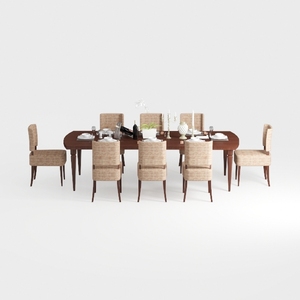
Modern Solid Wood Fabric Upholstered 8 Seat Dining Table Set 3D Model

Minimalist Tan Leather L-Shaped Sectional Sofa 3D Model
Homestyler is your go-to online home design platform for transforming your space effortlessly. With its user-friendly design tool, stunning 3D renderings, and a vast selection of design projects and DIY video tutorials, you can create your dream home with ease and inspiration.
立即免费设计
































