

The upcoming trend leans towards more compact living spaces accompanied by elevated expectations; my clients often grapple with issues of thresholds, storage, and sound transmission in smaller homes. Utilizing a spatial reasoning toolkit, I interpret the design plan—one-bedroom duplex layouts function like the initial framework for daily living. Data from the AIA and NAHB indicates a continued appetite for efficient, versatile designs even with stagnant square footage. This notion of the duplex serves as a living operating system: stairs acting as a command line, rooms serving as modules, and our routines compiled accordingly.
Split-Level Gallery + Quiet Loft
Design Logic: The lower level functions as a public gallery, while the upper area serves as a private workspace; the evolving hybrid work environment necessitates acoustic zoning and visual tranquility.
Flow: Entry leads to the kitchenette, which flows into the living bay, followed by stairs, a landing, and the bedroom; this clean sequence minimizes disruptions.
Sightlines: The lower section features a low horizon, with a vertically framed view to the stairs; upstairs, the visual focus is on the sky rather than screen glare.
Storage: Drawers under the stairs function as a cache; a wall niche grid near the entrance is ideal for storing keys, packages, and everyday essentials.
Furniture Fit: A slim sofa of 72–78 inches, a pedestal dining table measuring 30 inches in diameter, and a queen bed positioned centrally with a 24-inch clear space on each side—ensuring API-safe tolerances.
Verdict: This layout is designed to future-proof daily activities: social interaction unfolds below while deep focus occurs above—stable, understandable, and mindful of attention.
save pin
Linear Spine with Pocket Service Core
Design Logic: A straight alignment functions like a streamlined data pathway; service areas are clustered mid-structure to minimize task latency.
Flow: Starting from the door, it moves to the coat cache, continues through the galley, and leads into a service pocket (laundry and bath) before reaching the stairs and then the bedroom; this design avoids loops and promotes linear progression.
Sightlines: The central spine provides an expansive view; side service areas conceal functional distractions, while UI layers disclose only essential elements.
Storage: A full-height pantry plus utility tower; the bedroom wall system is 18–24 inches deep, serving as a long-term archive.
Furniture Fit: Galley counters are 24 inches wide with a 42-inch aisle; a dining bench is integrated into the wall, and the bed is designed with a 36-inch tail clearance for airflow.
Verdict: This layout functions like a dependable script—a clear path for commands, quiet service areas, and ample bandwidth for everyday living.
save pin
Corner Atrium Stair + Flexible Studio Upper
Design Logic: The staircase serves as a source of natural light; future living demands circadian cues and adaptable merges of work and sleep, all while avoiding clutter.
Flow: The corner entry leads to a living space encircling the atrium, moving to the stairs, then transitioning to a studio bedroom with movable partitions; this layout supports modular arrangements.
Sightlines: A vertical column of light functions as a home button; surrounding views remain soft, while the central area remains bright and comprehensible.
Storage: Toe-kick trays, a wall rail system, and ceiling-high wardrobes allow for scalable caching of life updates—beyond just seasonal needs.
Furniture Fit: A round table measuring 36–40 inches facilitates pivoting zones; the sectional comes in two 30-inch modules, while a murphy desk aligns perfectly with the partition track.
Verdict: Utilizing light as a structural element guides choices; flexible partitions allow the space to reconfigure for the next five years.
save pin
Final Takeaway
One-bedroom duplex floor plans transcend being mere stacks of rooms—they embody layered protocols for attention, privacy, and versatile work-life integration. Variants such as split-level lofts and linear spines illustrate how vertical separation encodes future routines while maintaining an honest footprint. Long-term needs, ranging from acoustic zoning to service pockets, can be effectively addressed by treating spaces as dynamic interfaces. Through my experience, the most intelligent homes of the future will not necessarily be larger, but rather more intentional—such as those designed using the Homestyler platform.
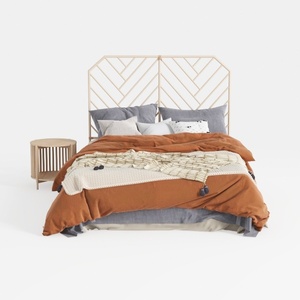
Modern Solid Wood Geometric Headboard King Bed with Linen Bedding 3D Model
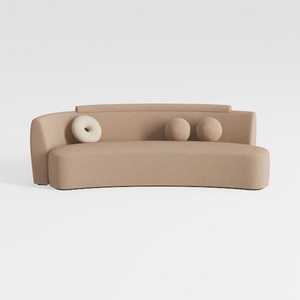

Yozma Curved Chenille Sectional Sofa Beige, Dual D

Modern Walnut Solid Wood Low Profile Platform Bed 3D Model
Looking for an easy way to transform your home? Try Homestyler! This user-friendly online design platform offers advanced 3D rendering, inspiring design projects, and helpful DIY video tutorials, making it simple to bring your creative visions to life—no experience needed!
立即免费设计
































