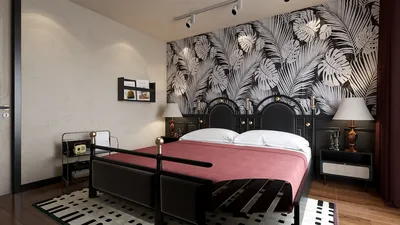


As we look ahead, my clients are experiencing the impact of evolving work environments: remote work increasingly encroaching on leisure time, with storage solutions falling short of managing our chaotic digital and physical lives. Data from AIA and NAHB consistently indicates that flexible spaces are now more sought after than traditional rooms, with affordability influencing the layout of living spaces. Consequently, two-bedroom house plans are emerging as essential designs for creating a harmonious living experience. I often rely on a spatial reasoning toolkit provided by tools like Homestyler to visualize the requirements of tomorrow's interiors.
Split-Core Gallery Spine
Design Concept: The primary and secondary bedrooms are positioned across a central gallery, ensuring privacy for hybrid families and adaptable living arrangements. This gallery serves as a functional spine, facilitating restful sleeping areas at either end while centralizing shared spaces.
Layout: The flow begins at the entry, moving through a mud drop area to the gallery, leading to the kitchen hub, living space, and terrace; with bedrooms extending from opposite sides, preventing overlap.
Sightlines: The gallery crafts long axial views to natural light, and the strategically placed doors prevent beds from being directly visible—UI layers prioritize public exposure first, while keeping private spaces discreet.
Storage Solutions: A continuous array of wall-depth cabinets along the gallery functions as a storage solution, featuring upper bins for seasonal items and conveniently accessible zones for daily necessities.
Furniture Arrangement: The primary bedroom accommodates a queen bed (60×80), while the secondary features either a full (54×75) or twin beds; sofa depth is maintained at 38 inches to optimize spatial flow.
Conclusion: This design seamlessly harmonizes remote work and guest accommodations without creating visual clutter; over time, it evolves from a couple-focused setup to a family-friendly environment without major modifications.
save pin
Front Studio + Rear Sanctuary
Design Concept: Positioning a versatile bedroom that can function as an office at the front and a serene suite at the back acknowledges future noise patterns and the rhythm of day and night.
Layout: The transition moves from the porch to a foyer pocket, leading to the flexible room (work/guest), open kitchen-living area, and the tranquil rear suite; a service loop conveniently places laundry and bathroom facilities in the middle.
Sightlines: A diagonal view from the entry to the garden establishes tranquility; translucent sliding doors confer a semi-public interface on the front room, allowing for privacy adjustments as needed.
Storage Solutions: The front room incorporates a vertical peg-wall alongside a closet for gear, while a hall linen closet serves as a micro-storage for cleaning supplies; the rear suite features two reach-in closets with deep organizers.
Furniture Arrangement: The space accommodates a 30×72 work table with cable management; a wall bed in the flexible room folds down to 16 inches, while the rear suite allows a 72-inch dresser and 24-inch nightstands without obstructing passages.
Conclusion: By delineating areas for work and retreat, this design channels noise effectively; five years later, it transforms from a freelancer's workspace to a family-oriented space.
save pin
Center Courtyard Loop
Design Concept: A compact courtyard becomes a crucial thermal and social hub, ensuring both bedrooms receive ample natural light while streamlining movement within a cohesive loop.
Layout: From the side entry, you navigate through a loop corridor around the courtyard, reaching the living-kitchen area with bedrooms positioned at adjacent corners, eliminating awkward dead ends and maximizing circulation.
Sightlines: A glazed pocket first reveals the sky, then the rooms; privacy is artfully handled through layered UI filters—clear towards the courtyard, softened for bedroom areas, and opaque for bathrooms.
Storage Solutions: Perimeter cabinetry wraps around the corners, under-bench dining drawers keep tableware organized, and an attic hatch above the loop stores infrequently used items.
Furniture Arrangement: A dining table measuring 9–10 feet runs parallel to the windows; a modular 84-inch sofa with a chaise stretches to 62 inches; platform beds incorporate built-in storage with 12-inch under-drawers.
Conclusion: The loop design maximizes limited space, optimizing light and ventilation akin to a well-designed network; over the years, it transitions smoothly from shared living to accommodating aging in place.
save pin
## Final Insights
Two-bedroom house plans represent more than just layouts; they serve as the foundational framework for modern living, efficiently routing attention, rest, and storage like a well-organized data network. Whether labeled as a two-bedroom unit or a compact family home, the essence lies in intentional design that ensures clear flow, sightlines, and integrated storage. The evolving requirements—like flexible workspace for guests and multigenerational privacy—are seamlessly incorporated when rooms are treated as interchangeable modules. From my perspective, the most promising two-bedroom designs aren’t solely larger, but crafted with greater purpose, and I continue to design with this forward-thinking approach, utilizing tools like Homestyler to enhance the layout.

Minimalist Solid Oak Open Bookshelf Storage 3D Model


bookshelf-Little Borrowers’ Cozy House
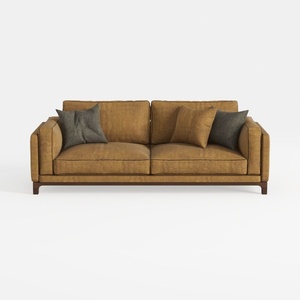
Minimalist Fabric Upholstered 2 Seater Sofa with Throw Pillows 3D Model
Homestyler is your go-to online home design platform! With its user-friendly design tool, stunning 3D renderings, a variety of design projects, and helpful video tutorials, you can effortlessly create and visualize your dream space. Unleash your creativity today!
Zaprojektuj teraz za darmo
































