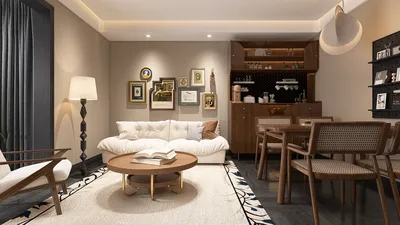


In a past project, I mistakenly installed LED strips upside down in a client's mini cinema, resulting in the glow shining on the carpet rather than creating a desired ambiance. This amusing mishap taught me that designing for compact cinema spaces requires a good amount of creativity. Small rooms often inspire big design innovations, and I’m excited to share five lighting solutions that I've successfully implemented in real projects, turning cozy spaces into captivating theaters with the help of tools like Homestyler.
1. Layered Ambient Lighting
Creating a layered ambient lighting effect can establish a gentle, theater-like backdrop without causing glare. My approach typically includes the use of recessed dimmable downlights alongside indirect LED cove lighting to prevent reflections on the screen. The benefits are twofold: you achieve excellent lighting control while cultivating a plush atmosphere. However, careful positioning is essential to ensure that the projector or television remains free from reflections.
save pin
2. Step and Stair LED Accents
Incorporating low-profile LED strips along steps or underneath seating not only enhances safety but also adds a touch of cinema charm. In a recent 12-seat room, I installed narrow warm-white strips beneath floating risers, and the patrons loved the subtle brightness. The advantages of this approach are its affordability and practicality; however, it’s crucial to use low-lumen lighting to maintain a distraction-free eye environment.
save pin
3. Smart Color Wash Walls
Tunable RGBW wall wash lights enable you to effortlessly shift the mood of your space, transitioning from a dramatic movie ambiance to an energetic gaming night. I paired these smart washes with a neutral wall finish to ensure accurate color representation. The primary benefit here is the immediate transformation of ambiance; yet, aligning skin tones and on-screen visuals accurately can pose a slight challenge.
save pin
4. Integrated Cove Lighting for Acoustic Panels
Merging cove LED lighting with acoustic panels not only conceals the fixtures but also enhances sound quality simultaneously. In one of my condominium projects, placing LEDs behind acoustic fins allowed the walls to breathe while managing reverberation effectively. This combination is both stylish and functional; however, careful planning is necessary to accommodate wiring and access to the panels during installation.
save pin
5. Focused Sconces and Dimmable Task Lights
Adjustable wall sconces paired with dimmable task lights empower you to read programs without causing light to spill onto the screen. I typically opt for warm color temperature fixtures to cultivate a cozy environment. While these upgrades are straightforward, precise positioning is vital to prevent glare on shiny surfaces.
save pin
Tips 1:
When budgeting, remember that LEDs significantly reduce long-term energy expenses and minimize heat output. It's worth investing a bit more initially for high-quality dimmers and adequate diffusion. For rapid layout visualizations, consider utilizing a room planner like Homestyler to experiment with fixture placements.
save pin
FAQ
Q1: What color temperature is ideal for a cinema room? A1: I suggest a range of 2700K to 3000K, as it creates a warm, theater-like atmosphere that is gentle on the eyes and complements display colors.
Q2: Is it advisable to use RGB lights behind my TV? A2: While RGB backlighting can enhance ambiance, it's essential to keep them dim and synchronized with content to avoid hindering contrast and causing eye strain.
Q3: Are recessed lights suitable for small theaters? A3: Absolutely—it's best to utilize adjustable, dimmable recessed lights placed strategically to avoid direct reflections on screens.
Q4: How can I prevent light from reflecting off the screen? A4: Ensure fixtures are positioned high and angled away from the screen, employ indirect cove lighting, and use matte wall finishes to reduce reflections.
Q5: Can lighting enhance sound performance? A5: Yes, integrating lighting with acoustic panels effectively conceals fixtures while improving sound quality; just remember to coordinate the mounting and wiring during the design phase.
Q6: What dimming system should I opt for? A6: It's advisable to select LED-compatible dimmers and, if feasible, a smart control system for scene presets—refer to manufacturer compatibility charts (like those from Lutron) for optimal performance.
Q7: How bright should pathway LEDs be? A7: It's best to keep step and pathway LEDs below 100 lux—adequate for safety yet dim enough not to divert attention from the screen.
Q8: How can I quickly visualize lighting layouts? A8: For swift 3D mock-ups and layout evaluations, using a 3D floor planner like Homestyler will help you visualize fixtures and their light distribution effectively.
save pin
Homestyler is an exceptional online home design platform that empowers you to create stunning interiors effortlessly. With its user-friendly design tool, impressive 3D renderings, diverse design projects, and helpful video tutorials, you can turn your home design dreams into reality. Dive in and explore your creativity!
立即免费设计
































